
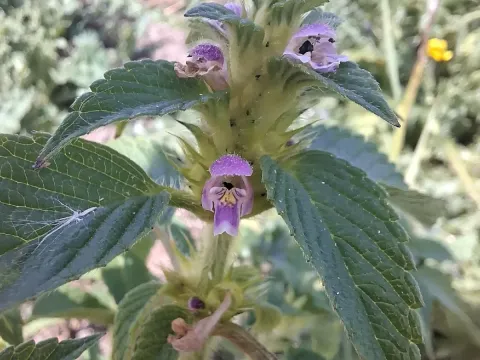
Split-lip hemp-nettle
Galeopsis bifida
Split-lip hemp-nettle (Galeopsis bifida) is an annual herbaceous plant belonging to the Lamiaceae family. It is widely distributed across temperate regions of Eurasia and North America, often functioning as a troublesome weed in agricultural settings.
What the section contains
Split-lip hemp-nettle
The plant thrives in diverse environments, including arable lands, gardens, and along roadsides. It prefers fertile, moist soils, which explains its high prevalence in agricultural fields where nutrients are concentrated for crop growth.
Morphologically, Galeopsis bifida is characterized by a bristly, square-shaped stem and opposite, lanceolate leaves. Its flowers, which are grouped in whorls, feature a distinctively bifid (split) lower lip, which allows for easy identification in the field.
Climate requirements include moderate temperatures and consistent soil moisture. While it can withstand temporary drought, its peak development occurs during periods of frequent rainfall and adequate sunlight, which it competes for against primary crops.
As a weed, its impact is primarily negative, as it competes for nutrients and water, reducing overall yields in cereals, vegetables, and fodder crops by shading out seedlings during the critical early stages of crop development.
Common plant diseases that affect split-lip hemp-nettle include powdery mildew and various leaf spot fungi, especially when plants are grown in dense, poorly ventilated conditions.
Insect pests such as aphids and small beetles often inhabit the plant, potentially turning it into a host that can transfer pathogens or pests to desirable agricultural crops nearby.
The persistence of the plant in the landscape is largely due to its high seed production capacity, with seeds remaining viable in the soil for several years, forming a durable seed bank.
Integrated weed management, including mechanical hoeing and the strategic use of herbicides, is essential to minimize the density of this plant in commercial fields.
Preventive measures like crop rotation and maintaining soil fertility management are effective strategies to prevent the mass infestation of this species in cultivated areas.