
Spanish catnip
Nepeta hispanica
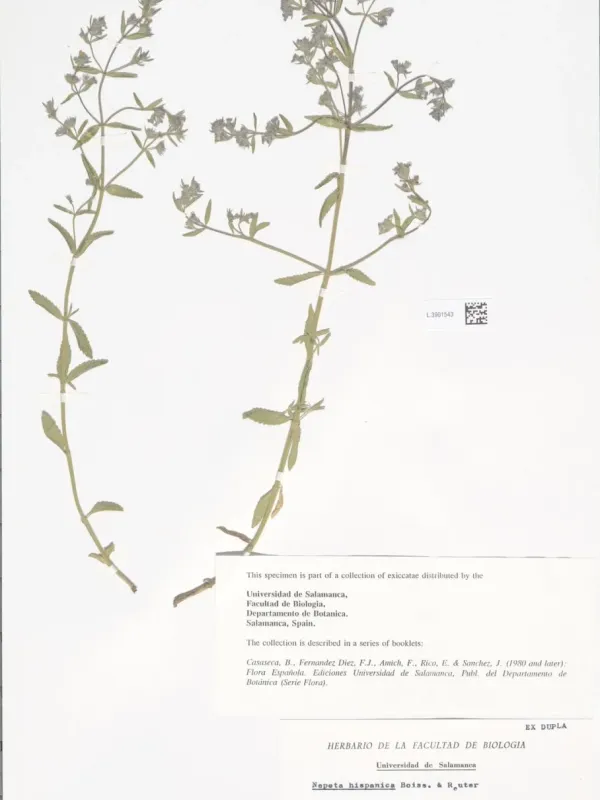
Description
Sowing dates
Spanish catnip (Nepeta hispanica) is a perennial herb belonging to the Lamiaceae family, known for its aromatic properties and resilience.
Seeds should be sown in early spring as soon as the soil is workable, or in late autumn for natural stratification in temperate zones.
The seeds are small and require minimal covering with soil, typically no deeper than 0.5 to 1 cm, to ensure proper germination and emergence.
Row spacing is generally maintained at 45–60 cm to provide enough room for plant development and to allow for mechanical weed control.
Consistency in moisture levels is crucial during the germination phase to ensure a uniform plant stand across the cultivated field.
Growing requirements
This species thrives in open, sunny environments where high levels of solar radiation support the production of essential oils.
It prefers well-drained, sandy loam or loamy soils with a neutral pH, as it is highly sensitive to waterlogged conditions that cause root rot.
While the plant is relatively drought-tolerant once established, supplemental irrigation during the peak growing season enhances biomass yield.
The plant is well-adapted to varied climatic conditions and exhibits good winter hardiness, making it suitable for many geographical regions.
Air circulation is vital for the health of the crop, as high humidity and lack of airflow can predispose the plants to various fungal issues.
Yield
Spanish catnip serves several industries, primarily as a source of medicinal compounds, fragrance ingredients, and high-quality essential oils.
Its aromatic properties make it a desirable ingredient in the cosmetic and perfumery sectors, where it is used to add unique herbal notes.
The plant is an excellent nectar source for bees, contributing significantly to honey production and local ecosystem biodiversity during the summer.
In traditional and modern medicine, the herb is valued for its mild sedative, antispasmodic, and anti-inflammatory characteristics.
Beyond its industrial uses, it is increasingly popular as a culinary herb, providing a fresh, mint-like flavor to beverages and cooked dishes.
Main diseases and pests
Root rot is the most common fungal threat, usually triggered by poor drainage and excessive soil moisture during the active growth period.
Powdery mildew may manifest as a white coating on the leaves during periods of high humidity and stagnant air, reducing overall plant vigor.
Pests such as aphids and spider mites can infest the crop, causing leaf deformation and reducing the essential oil content of the herb.
Integrated pest management, including crop rotation and the removal of plant debris, is essential for maintaining a healthy and productive crop.
Chemical intervention should be minimized to ensure the final product meets the safety standards required for medicinal and food applications.
Harvesting
Harvesting should be timed to coincide with the peak flowering period, as this is when the concentration of essential oils is at its highest.
The aerial parts are harvested using mechanical mowers or hand tools, cutting the stems approximately 15 cm above the soil surface.
Immediate post-harvest drying is necessary; the material should be spread in thin layers in a shaded, well-ventilated area to preserve quality.
Drying temperatures must be kept below 40 degrees Celsius to prevent the rapid evaporation of volatile aromatic compounds found in the foliage.
Properly cured and stored herb maintains its color and potent fragrance, ensuring it meets the commercial requirements for global trade.