
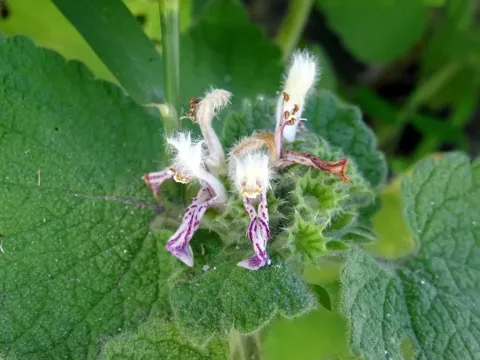
Spanish ballota
Ballota hispanica
Spanish ballota (Ballota hispanica) is a perennial herbaceous plant belonging to the Lamiaceae family. It is known for its resilience and adaptability to Mediterranean climate conditions, making it a viable candidate for specialized herbal crop production.
What the section contains
Spanish ballota
Propagation is primarily achieved through seeds or vegetative division of the rootstock. Sowing should be performed in spring once the soil temperature consistently reaches 10–12 degrees Celsius to ensure uniform germination.
The seeds should be sown at a shallow depth of approximately 1–2 centimeters. Proper soil contact is essential, as the seeds require sufficient moisture but are sensitive to deep burial which may hinder the emergence of the sprout.
An optimal planting density requires spacing of about 40 centimeters between rows and between individual plants. This spatial arrangement allows for adequate airflow and ensures that each plant receives sufficient nutrients and light.
Germination typically occurs within two to three weeks under favorable conditions. During the seedling stage, it is critical to keep the soil weed-free, as the plant grows slowly and is easily overwhelmed by aggressive competing vegetation.
Spanish ballota thrives in well-lit environments and requires full exposure to sunlight for optimal development. Shaded areas lead to stunted growth and a significant reduction in the concentration of essential oils in the foliage.
It prefers loose, sandy, or loamy soils with good drainage properties. Waterlogged soil is detrimental to the plant and frequently leads to root rot, which is the most common cause of failure in agricultural production of this species.
Although the plant is drought-tolerant once established, regular irrigation during the primary growing season is recommended to maximize the biomass yield. Over-watering should be avoided, especially in heavy clay soils where drainage is suboptimal.
Fertilization should be moderate, focusing on phosphorus and potassium to strengthen the plant structure. Excessive nitrogen application should be avoided, as it encourages excessive vegetative growth which can dilute the active medicinal compounds.
Winter care is essential in regions with frost. Applying a layer of organic mulch around the base of the plant protects the rootstock from severe temperature drops, ensuring the plant returns the following spring.
The harvestable part of the plant consists of the aerial biomass gathered during the peak flowering stage. This timing is critical because the chemical composition of the plant is at its most concentrated when the blossoms are fully open.
Under good management practices, yields can reach 15–20 decitonnes of dry matter per hectare. The crop can be harvested multiple times throughout the season, provided the plants are not cut too low to the ground.
Post-harvest processing involves immediate drying in well-ventilated, shaded facilities. Temperatures exceeding 40 degrees Celsius should be avoided to prevent the loss of volatile oils and degradation of active chemical components.
Spanish ballota is valued for its antiseptic and sedative properties, with demand coming primarily from the pharmaceutical and herbal supplement industries. Its aesthetic value also makes it suitable for ornamental landscaping.
Consistency in crop quality is maintained through strict adherence to harvest timing and storage conditions. Dried raw material remains stable for up to two years when stored in sealed, light-proof containers.
The plant is generally resistant to pests; however, aphids may appear under conditions of poor ventilation or nitrogen excess. Biological control methods are highly recommended to preserve the purity of the medicinal crop.
Fungal diseases, particularly powdery mildew and root rot, represent the most significant threat to the crop. These are primarily caused by excessive humidity and poor soil structure, which can be mitigated by careful site selection.
Weed management is paramount, especially in the first two years of the crop cycle. Manual or mechanical hoeing between rows is the standard practice, as it also improves soil aeration and benefits root health.
Preventative measures include regular crop rotation, ensuring the land is not used for Ballota species more frequently than every three to four years. This cycle helps break the life cycle of soil-borne pathogens.
Monitoring for spider mites during particularly dry and hot periods is advised. If a population outbreak is detected, localized treatment with organic-certified acaricides can be implemented to minimize damage.
Harvesting should occur on a dry day, ideally during the mid-morning once the dew has evaporated. This practice ensures the moisture content in the raw material is kept to a minimum, simplifying the subsequent drying process.
Plants should be cut approximately 10–15 centimeters above the soil level. Using sharp, clean cutting tools prevents crushing of the stem tissue, which helps the plant recover quickly and prevents infection at the cut site.
Collected biomass must be moved to the drying area immediately. Allowing cut material to pile up in the field can cause internal heating and rapid fermentation, which ruins the quality of the raw material.
Spread the material in thin, even layers on screens or racks to facilitate air circulation. Turning the biomass once or twice during the drying process ensures an even moisture reduction throughout the batch.
Once dried to a crisp texture, the material should be sorted to remove any discolored leaves or debris. Final storage in dry, cool, and dark conditions completes the process, ensuring a high-quality pharmaceutical-grade product.