
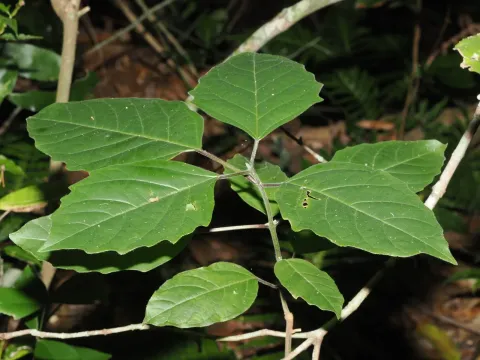
Clerodendrum tomentosum
Clerodendrum tomentosum
Clerodendrum tomentosum, commonly known as the hairy clerodendrum, belongs to the Lamiaceae family. Native to the coastal forests of Australia, this evergreen species is valued for its unique foliage and structural presence in landscape architecture.
What the section contains
Clerodendrum tomentosum
The plant thrives in warm, temperate to tropical climates, requiring consistent temperatures throughout the year to maintain its vigor. It is highly intolerant of frost, which necessitates cultivation in protected areas or regions with mild winter profiles.
Cultural requirements include high-fertility, well-draining soils with a near-neutral pH. Adequate soil moisture must be balanced with efficient drainage to prevent root hypoxia, which is a major limiting factor in plant development.
Botanically, the species is defined by its tomentose (hairy) leaves and elegant, tubular flowers that attract a variety of pollinators. The post-flowering fruit is notable for its stark visual contrast against the red calyces.
Economically, its use is primarily decorative, favored for its ability to create dense vegetative screens and its contribution to local biodiversity in native habitat restoration projects.
Pest management for Clerodendrum tomentosum involves constant monitoring for spider mites and scale insects, which frequently target young leaf tissues in sheltered environments.
Fungal issues, specifically root rot, are common indicators of over-irrigation or inadequate drainage, requiring immediate adjustment of the watering schedule.
Integrated pest management strategies should prioritize mechanical removal and the use of targeted biological controls before resorting to chemical applications.
Maintaining optimal airflow around the plant foliage is essential to prevent the colonization of common pathogenic molds and powdery mildew.
Preventive maintenance, including the removal of deadwood and infected foliage, remains the most effective defense against systemic plant diseases.