
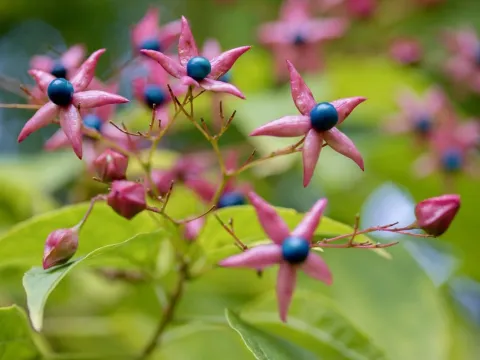
Clerodendrum thyrsoideum
Clerodendrum thyrsoideum
Clerodendrum thyrsoideum is an attractive evergreen shrub belonging to the Lamiaceae family. Native to the tropical regions of Southeast Asia, this species is highly valued for its dense, thyrsus-like inflorescences that provide high ornamental appeal.
What the section contains
Clerodendrum thyrsoideum
The plant thrives in bright, indirect light conditions. While it appreciates warmth, it should be protected from intense mid-day sun, which can cause leaf scorch. An ideal temperature range is between 22°C and 26°C during the growing season.
Soil requirements focus on high organic matter content and excellent drainage. A mix consisting of peat, leaf mold, and perlite ensures proper aeration, which is critical for preventing root rot and supporting healthy growth.
Watering should be frequent enough to keep the substrate consistently moist but never waterlogged. During winter, the plant enters a period of relative dormancy, requiring reduced irrigation and a slightly cooler ambient temperature.
Pruning is essential for maintaining the shape and vigor of Clerodendrum thyrsoideum. By pruning back long stems after the flowering cycle, gardeners encourage bushy growth and maximize flower production in the following season.
Spider mites are the most common pests that thrive in dry indoor air, targeting the underside of the leaves. Frequent misting and maintaining humidity levels above 50% are effective preventative measures against infestations.
Whiteflies and mealybugs can also affect the plant, particularly if it is kept in poor ventilation conditions. These pests suck the plant's sap, potentially causing yellowing and stunted leaf development.
Root rot is the primary threat arising from overwatering or poor soil drainage. If the stems appear soft or dark at the base, it is a clear sign that the soil moisture levels need immediate adjustment.
Fungal diseases like leaf spot may occur if the foliage remains wet for extended periods. It is advisable to water the soil directly rather than wetting the leaves, especially in cooler, humid conditions.
Using systemic insecticides or neem oil is recommended for active pest control. For general health, regular fertilization with a balanced NPK ratio is crucial to keep the plant resilient against minor infections.