
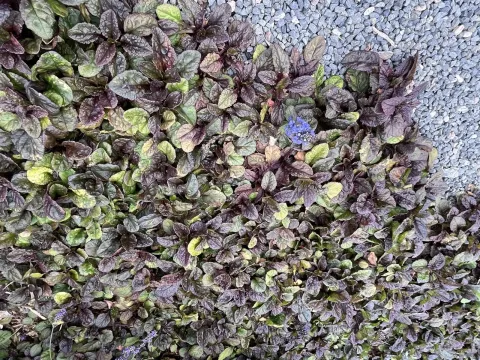
Bugleweed
Ajuga L.
Bugleweed (genus Ajuga) belongs to the Lamiaceae family. It is a hardy, perennial herbaceous plant widely recognized for its excellent ground-covering capabilities and rapid vegetative spread through stolons.
What the section contains


Bugleweed
Native to temperate regions of Europe, Asia, and Africa, this plant has adapted to diverse soil conditions. In agricultural practice, it is often employed to stabilize soil on slopes and prevent the invasion of aggressive weed species.
The plant thrives in partial shade to full sun, provided the soil remains consistently moist and fertile. Its botanical structure includes basal rosettes of foliage and spreading stems that root at the nodes, creating a dense, low-growing mat.
From an agrotechnical perspective, bugleweed requires minimal maintenance. Planting is typically done in spring or early autumn, with sufficient spacing to allow for its vigorous horizontal growth habit across the site.
Beyond its landscape value, certain varieties of Ajuga are utilized for their medicinal properties. These plants contain tannins and bioactive compounds that have been historically valued in herbal medicine applications.
Slugs and snails represent the primary pest challenge, particularly in humid or shaded environments. These pests feed on the succulent leaves, and population control using physical barriers is standard practice.
Root rot is the most common pathology associated with poor soil drainage. When plants are kept in waterlogged conditions, their vascular systems become susceptible to fungal infections, leading to rapid dieback.
Powdery mildew can occasionally manifest during warm, stagnant periods. Managing air circulation around the patches is essential to mitigate the risk of fungal spore germination and disease spread.
Nematodes are serious soil-borne pests that affect root health. While difficult to treat chemically, crop rotation and the use of pest-free propagation material remain the most effective preventive strategies.
General maintenance, including the removal of dead or yellowing foliage, is crucial for preserving the plant's health. Consistent monitoring ensures that any pest or disease incidence is contained before it spreads throughout the carpet.