
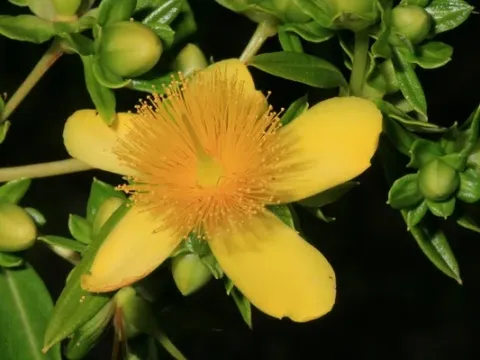
St. John's wort (Spathulate)
Hypericum spathulum
Sowing of Hypericum spathulum is best carried out in the spring, once the soil has warmed to 10-12 degrees Celsius. The seeds are viable, but cold stratification for one month is highly recommended to improve germination rates.
What the section contains
St. John's wort (Spathulate)
In commercial agriculture, seeds should be sown in rows with spacing of 45-60 centimeters. The seeding depth must be shallow, approximately 0.5-1 centimeter, as the tiny seeds require sufficient light to germinate effectively.
Alternatively, the transplant method can be used to ensure a more uniform crop. Seedlings should be transferred to the field once the first set of true leaves appears, followed by consistent irrigation for the first few weeks.
The plant grows slowly during the initial establishment phase, making weed control crucial. Regular hoeing and weeding during the first year of growth are essential for successful stand establishment.
The optimal plant density is approximately 8-10 plants per linear meter of the row, providing sufficient space for healthy growth and proper air circulation around each plant.
Hypericum spathulum belongs to the Hypericaceae family and thrives in well-drained, sandy loam or light loamy soils with a neutral or slightly acidic pH level.
It is a sun-loving species; therefore, planting sites should be selected in open areas with full sun exposure, avoiding any shading from buildings or trees.
While the plant exhibits moderate drought resistance, it requires stable soil moisture to reach its maximum biomass potential, especially during the peak growing season.
The plant is well-adapted to varied climatic conditions and demonstrates good cold tolerance, making it suitable for regions with temperate winters.
Agricultural management requires the application of balanced nitrogen-phosphorus fertilizers during active growth, though over-fertilization should be avoided to maintain the plant's natural chemical balance.
The primary economic focus of Hypericum spathulum cultivation is the production of medicinal raw materials, valued for their specific secondary metabolites, such as hypericin.
Maximum yields of dry aerial mass are typically achieved in the second and third years. With proper management, farmers can expect yields of 15-20 centners per hectare.
Timely harvesting of the crop stimulates regrowth and enhances tiller density, which directly contributes to higher productivity in subsequent harvest cycles.
The raw plant material is widely utilized in the pharmaceutical industry to produce herbal supplements, mood-stabilizing medicines, and various anti-inflammatory formulations.
Beyond pharmaceuticals, the plant finds application in the cosmetic industry for creating skin-soothing ointments and topical treatments for dermatological care.
Fungal diseases, particularly powdery mildew, pose the most significant threat to plant health, especially under conditions of high humidity or poor field ventilation.
Root rot may occur in poorly drained, heavy soils. To prevent this, careful site selection and the implementation of a proper crop rotation schedule are necessary.
Pests such as leaf beetles and cutworms can cause significant damage to the foliage, which reduces the overall quality and quantity of the marketable medicinal herb harvest.
Biological pest control methods are recommended over chemical pesticides to ensure the final product meets the purity standards required for pharmaceutical processing.
Regular scouting of the fields during the flowering phase allows for the early detection of disease outbreaks and the immediate implementation of corrective measures.
Harvesting should occur during the stage of mass flowering, which is the period when the concentration of bioactive ingredients is at its peak in the aerial parts.
Stems should be cut at a height of 10-15 centimeters above the soil level using mechanical harvesters or manual tools depending on the scale of the operation.
Once harvested, the material must be dried immediately in a shaded area or in specialized dryers at temperatures not exceeding 45-50 degrees Celsius to prevent degradation.
Protection from direct sunlight during the drying process is critical, as UV exposure causes the rapid breakdown of essential compounds and leads to discoloration.
After reaching the desired moisture content, the final dried product must be cleaned, packaged, and stored in dry, well-ventilated conditions to maintain long-term quality.