
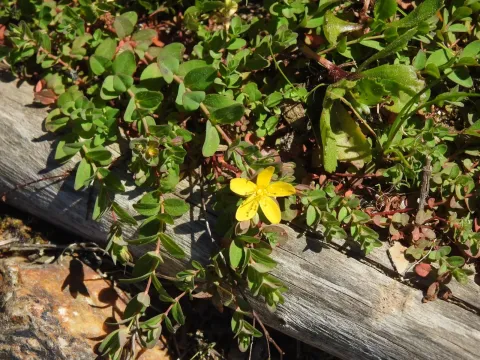
Trailing St. John's-wort
Hypericum humifusum
Trailing St. John's-wort (Hypericum humifusum) belongs to the Hypericaceae family. It is a procumbent perennial herb characterized by its spreading, prostrate stems that typically bloom with small yellow flowers during the summer months.
What the section contains
Trailing St. John's-wort
The species is native to Europe and is commonly found in damp, sandy, or gravelly soils. It typically inhabits heaths, woodland clearings, and areas with acidic substrate conditions, showcasing high ecological plasticity.
When cultivated, the crop requires full sun to partial shade. The ideal soil profile should be well-drained and slightly acidic, as the roots are sensitive to waterlogging which can lead to rapid physiological decline.
Climatic requirements focus on cool to temperate zones. The plant is hardy but performs best when moisture levels are consistent, avoiding both drought stress and excessively water-saturated ground conditions.
Agricultural practices prioritize weed management in the early stages of growth, as the plant is relatively low-growing and can be easily outcompeted by taller, more aggressive weed species in the field.
The primary threats to Hypericum humifusum include fungal diseases such as leaf rust and powdery mildew, which thrive in stagnant, humid microclimates within dense plant stands.
Insect pests, including various beetle species, can cause significant foliar damage. Managing these populations requires monitoring and, if necessary, the application of organic pest control methods.
Root rot, specifically caused by Pythium species, poses a major risk to plant health in fields with poor drainage. Implementing proper soil preparation and drainage systems is essential for disease prevention.
Invasive weed species compete for nutrients and light, posing a secondary threat to the vitality of the crop. Manual weeding or careful inter-row cultivation is often required to keep the fields clean.
Maintaining proper plant spacing is a critical agronomic factor, as it improves air circulation and significantly reduces the probability of moisture-related fungal infections throughout the growing season.