
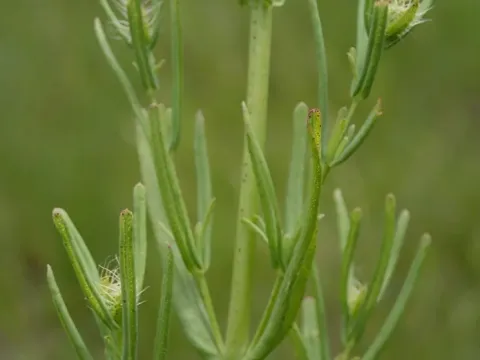
Thasian St. John's wort
Hypericum thasium
Thasian St. John's wort (Hypericum thasium) is a herbaceous perennial plant belonging to the Hypericaceae family. It is a rare, endemic species native to the mountainous and rocky habitats of the Thasos island region, adapted to limestone substrates.
What the section contains
Thasian St. John's wort
Botanically, the plant is recognized by its dense foliage and distinct golden-yellow flowers. It possesses specialized glands on the leaves, which contain secondary metabolites, specifically hypericin and hyperforin, which define its medicinal value.
The crop requires full sun exposure to thrive. In agricultural settings, it is essential to mimic its natural environment by providing significant solar radiation, which facilitates the optimal concentration of active chemical compounds within the plant tissues.
Soil requirements focus on excellent drainage and a slightly alkaline pH. It thrives in stony, well-aerated soils. The root system is sensitive to waterlogging, necessitating a location with natural or artificial slope drainage to prevent physiological stress.
The primary economic use of this plant is in the pharmaceutical industry. Its secondary metabolites are extracted for the production of herbal supplements, antidepressants, and topical antiseptics. Additionally, it serves as a robust ornamental species for xeriscaping.
Common threats to the crop include fungal diseases such as leaf rust and powdery mildew. These are primarily managed through strict humidity control and ensuring adequate air circulation between individual plants in the field.
Pest pressures primarily involve foliage-feeding insects, such as certain species of beetles. Integrated pest management (IPM) practices are recommended to minimize environmental impact while maintaining the high quality of the medicinal harvest.