
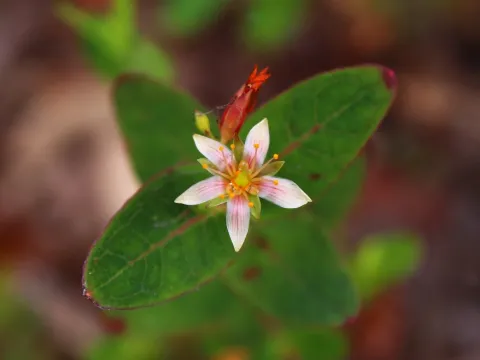
Triadenum
Triadenum
Triadenum is a genus of herbaceous perennial plants belonging to the Hypericaceae family. These plants are typically found in moist or swampy habitats, such as wetlands, fens, and the damp edges of ponds, predominantly across temperate regions in the Northern Hemisphere.
What the section contains
Triadenum
Botanically, Triadenum species are distinguished by their opposite leaves, which often feature translucent oil glands visible when held up to the light. The flowers are typically arranged in terminal clusters, and while they share similarities with the St. John’s wort (Hypericum), they possess unique reproductive structures that define their classification within this specific genus.
To cultivate Triadenum successfully, growers must prioritize moisture management, as these plants are essentially hydrophytic in nature. They thrive in environments where the soil remains consistently saturated throughout the growing season, making them ideal candidates for low-lying areas or managed riparian zones that mimic their natural wetland ecosystems.
The soil requirements for optimal growth involve nutrient-dense, organic-rich substrates, preferably with an acidic or slightly acidic pH balance. Unlike many agricultural crops, Triadenum does not tolerate drying out; therefore, incorporating moisture-retentive amendments like peat or high-quality compost into the planting site is essential for long-term survival.
Regarding its utility, Triadenum is primarily utilized in specialized ecological restoration projects or as a focal point in water gardens and botanical collections. Researchers are also interested in the plant's phytochemical profile, as species within this genus contain chemical compounds that suggest potential applications in traditional medicine and pharmacy.