
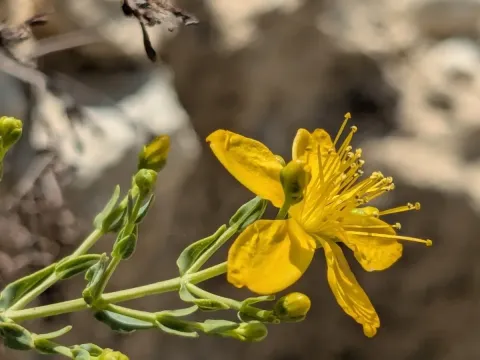
Triquetrous St. John's-wort
Hypericum triquetrifolium
Triquetrous St. John's-wort (Latin: Hypericum triquetrifolium) is a perennial herbaceous plant belonging to the Hypericaceae family. It is distinct due to its unique triquetrous stem morphology and specific botanical traits that separate it from other related species.
What the section contains
Triquetrous St. John's-wort
Originating from the Mediterranean basin and the Middle East, this plant is naturally adapted to harsh, arid climates. It thrives in open, sunny habitats and is highly resilient to prolonged periods of drought, making it suitable for cultivation in challenging environments.
The crop prefers well-drained, porous soils. It is essential to avoid sites with poor drainage or heavy clay components, as these can lead to root system decay. A soil pH ranging from neutral to slightly alkaline is ideal for optimal nutrient absorption.
Cultivation practices require full sun exposure throughout the growing season to ensure the synthesis of secondary metabolites. In agronomy, adequate spacing is recommended to prevent competition for light and air circulation, which helps maintain plant vigor.
Economic importance is centered on its medicinal value, specifically its pharmacological profile containing active compounds like hyperforin. It is widely used in the production of herbal supplements and phytomedicines targeted at neurological and inflammatory conditions.
The main agronomic threats to this species include fungal infections such as root rot and powdery mildew. These are primarily caused by excessive soil moisture and poor airflow within the crop canopy, necessitating proactive environmental management.
Pest pressures include infestation by spider mites and aphids, which can stunt plant growth. Integrated Pest Management (IPM) strategies, including monitoring and biological control, are recommended to protect the quality of the harvested aerial parts.
Harvesting should be timed precisely with the peak flowering period when the concentration of essential secondary metabolites is highest. Mechanical harvesting techniques are preferred for large-scale operations, ensuring clean cuts of the upper foliage.
Post-harvest management involves rapid drying in a shaded, well-ventilated environment to prevent discoloration and degradation of heat-sensitive active ingredients. Controlled drying conditions are essential for maintaining the market value of the product.
Storage requires moisture-resistant packaging and cool, dark conditions to ensure the product remains viable for export or pharmaceutical processing. Strict quality control protocols are applied to verify the potency of the dried material before distribution.