
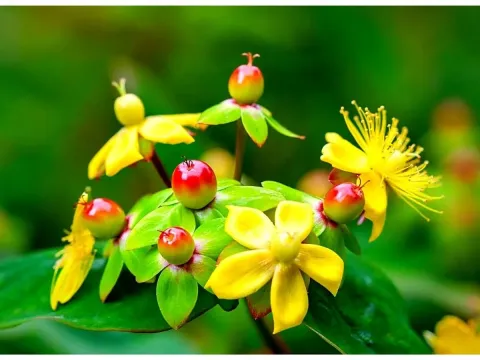
Umbel St. John's wort
Hypericum umbellatum
Sowing Hypericum umbellatum is best performed in early spring or late autumn in well-prepared, loose soil. The seeds require a fine seedbed to ensure proper moisture absorption and a high germination rate during the initial growth phase.
What the section contains
Umbel St. John's wort
The seeds should be planted at a shallow depth of no more than 1 centimeter. After sowing, it is essential to roll or compact the soil slightly to ensure that the tiny seeds remain in close contact with the earth, facilitating uniform emergence.
For industrial farming, sowing in rows with a spacing of 45 to 60 centimeters is recommended. This layout allows for efficient mechanical weed control and ensures adequate sunlight and air circulation for each individual plant.
If starting seeds in greenhouses, sowing should occur in March. Seedlings are then transplanted into the open field once the danger of late spring frosts has passed, maintaining sufficient distance between rows to promote healthy development.
Seedling emergence typically takes two to three weeks under favorable moisture conditions. During the early development stage, consistent monitoring is necessary to prevent weed competition, as young plants are vulnerable to being stifled by vigorous grasses.
Hypericum umbellatum is a perennial species belonging to the Hypericaceae family. It is naturally adapted to mountain and semi-mountainous regions, thriving in sunny, well-lit environments with exposure to direct sunlight.
The crop prefers well-drained loamy or sandy soils with a neutral to slightly acidic pH level. It is crucial to avoid planting in waterlogged areas, as stagnant water significantly increases the risk of root rot and inhibits plant vitality.
While the plant is relatively resilient to moderate drought, stable soil moisture is required for maximum biomass production. Irrigation systems should be implemented during dry summer months to support continuous active growth.
Balanced fertilization, particularly with potassium and phosphorus, is essential for promoting root strength and improving the plant's winter hardiness. Organic compost can be used as a base fertilizer during soil preparation to improve soil structure.
The species is well-suited to temperate climates and demonstrates good cold tolerance. Provided there is sufficient winter cover, the plant successfully survives cold seasons and initiates vigorous vegetative growth in the spring.
The economic value of cultivating Hypericum umbellatum lies in its multi-year production cycle. A well-managed plantation can remain highly productive for five to seven years, significantly improving the return on investment for growers.
The target harvest is the aerial part of the plant, which is collected during the peak flowering stage. Harvesting at this specific time ensures the highest concentration of medicinal compounds, such as hypericin and various flavonoids.
Post-harvest processing is critical for quality control. Drying must occur in well-ventilated rooms at temperatures not exceeding 45 degrees Celsius to prevent the oxidation of active components and preserve the plant's natural color.
The dried raw material is in high demand for the pharmaceutical industry and the production of health supplements. The plant's documented anti-inflammatory and antiseptic properties ensure a stable market for high-quality production.
Yield stabilization is achieved through systematic care, including regular pruning and soil aeration. Efficient plantation management ensures that the plants remain vigorous and disease-free, maximizing total yield per hectare annually.
The primary threats to Hypericum umbellatum are fungal diseases, such as rust and root rot, which are often triggered by excessive soil moisture and poor ventilation in the field. Maintaining a balanced plant density is a key prevention strategy.
Pests, particularly aphids and various leaf-eating beetles, can cause significant damage during the active growing season. Integrated pest management, involving regular field inspections and biological controls, is highly recommended for organic production.
Crop rotation is essential for long-term plantation health. Growing the plant in the same location for too many consecutive years can lead to the buildup of soil-borne pathogens, necessitating a strategic transition to other crops.
Fungal infection management relies heavily on the use of clean, certified planting material and strict hygiene protocols. Tools used for harvesting should be disinfected regularly to prevent the spread of diseases between different areas of the field.
If chemical interventions are necessary, they must be applied according to local agricultural guidelines, strictly observing the pre-harvest interval to ensure that no harmful chemical residues remain in the final medicinal product.
Harvesting is performed by cutting the upper stems, typically 20 to 30 centimeters in length, during the peak bloom. Using sharp, clean blades is vital to ensure a clean cut that promotes faster recovery and secondary growth of the plant.
Harvesting should only take place during dry, sunny weather. Processing wet plant material significantly increases the risk of mold growth during the drying process and results in inferior product quality that may be rejected by processors.
Freshly cut material should be moved to the drying facility immediately. If biomass is left in piles for too long, it can undergo spontaneous heating, which degrades the heat-sensitive organic compounds responsible for the plant's efficacy.
For large-scale operations, specialized mechanical harvesters can be used, provided they are calibrated for the specific height of the plants. This helps ensure that mostly foliage and flowers are collected, keeping woody stem content minimal.
After drying, the harvest should be sorted and sifted to remove any stray weeds or damaged plant parts. The finished product should be packed in breathable, moisture-resistant packaging and stored in a cool, dark environment to maintain potency.