
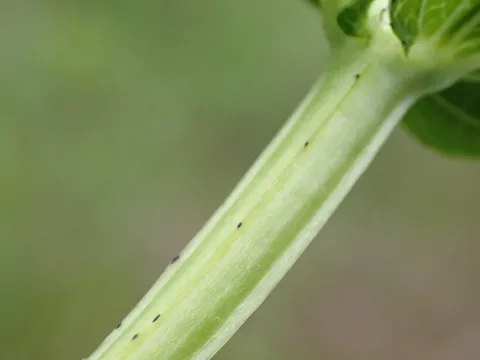
Spotted St. John's-wort
Hypericum maculatum
Spotted St. John's-wort (Hypericum maculatum) is a perennial herb of the Hypericaceae family. Successful cultivation begins with seed selection and careful preparation of the field, usually through autumn or early spring sowing.
What the section contains
Spotted St. John's-wort
Seeds are extremely small and should be sown at a shallow depth of approximately 1 cm to ensure proper germination and development of the initial seedlings.
Planting in rows with spacing between 45 and 60 cm is recommended to facilitate mechanical weeding and ensure adequate airflow across the plantation.
Seedlings develop slowly during the first stage of growth, requiring diligent weed management to prevent competition for nutrients and sunlight during the early season.
The plant is highly resilient and establishes a deep root system, making it suitable for long-term production cycles of five years or more on the same site.
This species thrives in sunny environments, as high solar radiation is essential for the synthesis of secondary metabolites within the plant tissue.
Ideal soil conditions include well-drained, fertile loams or sandy soils; standing water is detrimental to the plant and must be avoided through proper site selection.
Optimal growth requires moderate moisture levels; irrigation may be necessary during prolonged droughts to maintain yield levels and plant health.
The plant is frost-hardy and well-adapted to temperate climates, allowing it to withstand harsh winters without significant mortality.
Balanced fertilization with organic matter and essential minerals helps sustain high annual production and robust vegetative mass throughout the growth cycle.
Yield peaks during the third and fourth years of establishment, with proper care and regular pruning promoting consistent growth and biomass development.
Dry herbal mass yields vary depending on site quality, generally ranging from 0.8 to 1.2 tonnes per hectare under well-managed agricultural practices.
The primary use of the harvested product is within the pharmaceutical industry for the production of herbal teas, supplements, and skin-care therapeutic agents.
Timely post-harvest nutrient applications can stimulate secondary growth, sometimes allowing for multiple harvests in a single season in favorable weather conditions.
Economic viability is driven by market demand for high-quality, pure botanical material that meets standardized pharmaceutical specifications.
The main agronomic challenges include fungal infections such as root rot and powdery mildew, which often occur under high-humidity conditions or poor field drainage.
Insects like leaf beetles and mites can cause localized damage to the foliage, which reduces the overall commercial quality of the harvested crop.
To mitigate these risks, it is essential to implement strict crop rotation cycles, avoiding planting on soil previously used for Hypericum species.
Integrated pest management strategies focusing on early detection and preventative sanitation are critical for maintaining large-scale plantation health.
- Regular monitoring of soil moisture levels to prevent fungal growth.
- Removal and destruction of infected plant debris from the field.
- Using balanced fertilizers to increase plant natural resistance.
Harvesting should be timed precisely during the peak flowering stage to ensure the highest concentration of active compounds, particularly hypericin.
Cutting the upper 20-30 cm of the stems using specialized harvesting machinery is the standard approach to preserve the plant's capacity for rapid regrowth.
Harvesting must occur during dry weather to minimize moisture content, which is crucial for preventing spoilage and degradation of botanical quality.
Post-harvest processing involves immediate transfer to drying facilities to preserve essential oils and prevent fermentation caused by high respiratory heat.
Drying is performed at controlled temperatures (approx. 40-45°C) in well-ventilated areas to ensure the final product retains its vibrant color and medicinal potency.