
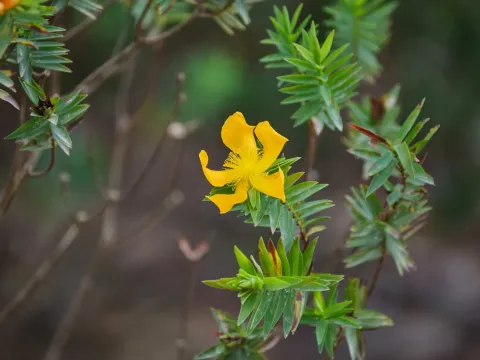
Styphelia-leaved St. John's wort
Hypericum styphelioides
The Styphelia-leaved St. John's wort (Hypericum styphelioides) is a perennial shrub belonging to the Hypericaceae family. Originating from specific Mediterranean regions, this plant is valued for its unique morphological features and distinct growth habit, making it an interesting subject for horticultural study.
What the section contains
Styphelia-leaved St. John's wort
Successful cultivation of this species requires well-drained soil conditions. The plant is highly sensitive to waterlogging, which often leads to root distress. Providing a loose, sandy, or stony soil substrate is essential for maintaining plant health and promoting strong root development.
Regarding climate requirements, the plant thrives in locations with abundant sunlight. While it exhibits some tolerance for partial shade, full sun exposure is generally preferred to ensure optimal flowering and to maintain the plant's natural compact shape and dense foliage density.
Temperature management is another key aspect of its agro-technology. The species is relatively well-adapted to Mediterranean climates with mild winters, but it may require protection or shelter in regions where frost is severe and prolonged, as it is not fully winter-hardy in all zones.
Annual maintenance, including light pruning, is recommended to encourage bushiness. By removing dead or weak wood during the dormant season, cultivators can ensure better air circulation throughout the plant, which is vital for preventing the accumulation of moisture and fungal spores.
The primary health threats to this species are fungal pathogens, specifically those causing root and collar rot. These issues are almost exclusively linked to poor drainage or excessive irrigation practices that keep the soil saturated for extended periods.
Foliar diseases, such as leaf spot or rust, can occur under conditions of high humidity and poor ventilation. These infections can significantly detract from the ornamental value of the plant and, if left untreated, may cause substantial defoliation and weakening of the shrub.
Insect pests, including aphids and spider mites, are known to attack the soft, emerging growth during the spring. These pests can stunt growth and cause leaf discoloration, necessitating a proactive monitoring strategy to detect infestations at an early stage.
Integrated pest management (IPM) is the most effective approach for this shrub. By combining cultural practices like proper spacing and hygiene with the judicious use of pesticides when necessary, growers can maintain a healthy plant population throughout the growing season.
It is important to dispose of any diseased plant material correctly by burning or burying it far from the cultivation site to prevent the cycle of infection. Clean tools and regular sanitation of the planting area are critical for long-term successful management.