
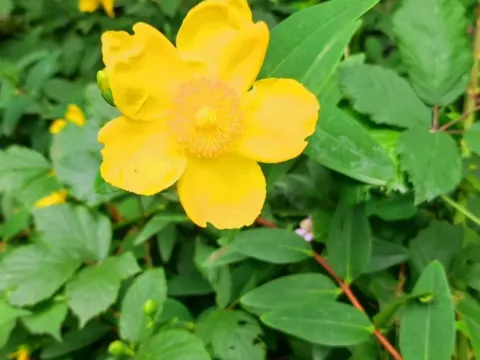
Goldencup St. John's wort
Hypericum patulum
Goldencup St. John's wort (Hypericum patulum) is a semi-evergreen shrub belonging to the Hypericaceae family. In horticultural practice, it is primarily propagated through stem cuttings, which ensures the consistency of its desirable ornamental characteristics.
What the section contains
Goldencup St. John's wort
The optimal time for planting rooted cuttings or seedlings is in early spring, once the soil has sufficiently warmed up. This timing facilitates the rapid establishment of the root system before the onset of extreme weather.
If propagation by seeds is preferred, they should be sown in prepared greenhouse trays in late winter. Seeds require a period of stratification to break dormancy and ensure uniform germination across the crop.
When transplanting into the field, select a location with ample sunlight, although the shrub is tolerant of partial shade. Proper spacing is essential to prevent overcrowding and to maintain the desired aesthetic shape of the plant group.
The soil should be prepared by deep cultivation and the incorporation of organic amendments. The crop thrives best in well-drained, nutrient-rich loam, as poor drainage is the primary limiting factor for healthy growth.
This shrub is well-suited to temperate climates but may require protection in areas with harsh winters. Applying mulch around the root zone helps regulate soil temperature and prevents frost damage to the lower stems.
Regular watering is necessary during the active growing season, especially during prolonged dry spells. However, farmers must avoid waterlogging the soil, as this frequently leads to physiological stress and fungal issues.
Balanced mineral fertilizers should be applied at the beginning of the growing cycle. It is advised to avoid nitrogen-heavy fertilizers in the late summer to prevent succulent growth that could be susceptible to early autumn frost.
A neutral to slightly acidic soil pH is ideal for optimal nutrient uptake. If the soil is heavy clay, incorporating coarse sand or fine gravel during the planting stage will significantly improve soil aeration and drainage.
Pruning is essential for maintaining a compact shape and promoting dense flowering. Annual removal of dead or crossing branches ensures the plant remains vigorous and aesthetically appealing throughout the season.
Common pests affecting this species include aphids and leaf-rollers, which damage foliage and developing buds. Integrated pest management strategies, including the use of systemic insecticides, are recommended when infestations occur.
Rust disease is the most common pathological threat, appearing as characteristic spots on the leaves. Good spacing between plants is the best preventative measure, as it encourages airflow and reduces leaf surface moisture.
Powdery mildew can develop in humid conditions. To mitigate this risk, avoid overhead irrigation and ensure that water is applied directly to the base of the plant to keep the foliage dry.
Fusarium root rot can occur if soil drainage is compromised. If this condition is identified, affected plants should be treated with appropriate fungicides, and irrigation schedules should be immediately adjusted.
Proactive monitoring of the crop is vital for early detection of diseases and pests. Regular scouting allows for localized treatments, which prevents the widespread loss of plants and preserves overall crop health.