
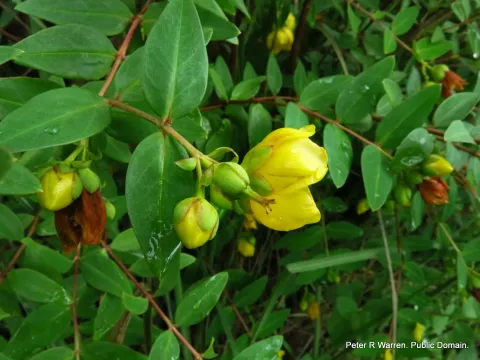
Forrest's St. John's wort
Hypericum forrestii
Forrest's St. John's wort (Hypericum forrestii) is a perennial shrub belonging to the Hypericaceae family. Originating from the mountainous areas of Southwestern China, this plant is valued for its vibrant yellow blossoms and adaptability to temperate climate zones.
What the section contains
Forrest's St. John's wort
The cultural success of this species depends on well-drained, fertile soil with a neutral to slightly acidic pH level. While the plant can tolerate partial shade, it performs best in full sun, which promotes denser foliage and more prolific flowering during the peak summer months.
Key agronomic practices include regular watering during the establishment phase and the implementation of mulching to retain moisture in the root zone. Overwatering must be strictly avoided to prevent the development of root rot, a common issue in heavier soil types.
Pruning is essential for maintaining the shape and vigor of the bush. It is recommended to perform light pruning in the early spring, removing dead or winter-damaged branches to stimulate new, healthy growth for the upcoming season.
Beyond its aesthetic function in landscape design, the plant is studied for its chemical composition. Like other members of the Hypericum genus, it contains bioactive compounds that hold significance for both traditional herbalism and modern botanical research.
The most significant pathological threats to this crop include rust fungi and powdery mildew, which thrive in stagnant, humid air conditions and during periods of high rainfall.
Managing these threats requires proper spacing between individual plants to ensure adequate airflow. Additionally, the application of appropriate fungicides may be necessary if environmental conditions favor disease progression.
Insect pests, such as aphids and beetles, can cause localized damage to foliage. Integrated pest management strategies, including the use of biological control agents, are preferred to maintain the health of the shrub without excessive chemical use.
Environmental stress, particularly during extreme winter temperatures, can cause tip dieback in younger plants, which necessitates adequate winter protection in colder regions.
Routine monitoring for signs of nutrient deficiencies or stress-induced weakness is a critical part of the maintenance program to ensure the longevity and productivity of the planting site.