
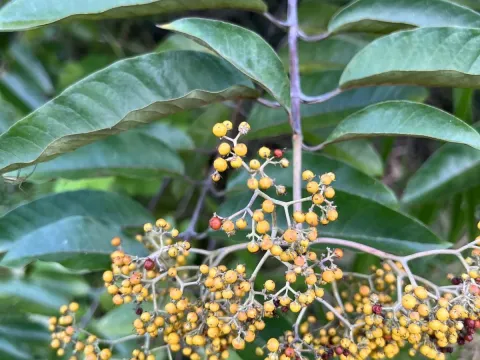
Harungana
Harungana
Harungana (specifically Harungana madagascariensis) is a pioneer species that naturally propagates through seeds. In a controlled agricultural setting, sowing is best initiated at the beginning of the rainy season to ensure optimal moisture levels.
What the section contains
Harungana
Before planting, seeds must be cleaned of pulp and potentially scarified to improve germination rates. They are then sown into a well-draining, nutrient-rich substrate at temperatures above 25°C.
Seedlings are transplanted to their permanent locations once they reach a height of 30–40 cm. Proper spacing is essential, as the species develops a wide, spreading canopy that requires sufficient sunlight and air circulation.
In nursery stages, protection from direct midday sun might be needed for very young seedlings, but as they mature, they require full sunlight to maintain their rapid growth rate.
Field establishment involves clearing the immediate area around the saplings to eliminate competition from fast-growing weeds, which are the primary obstacle for young Harungana trees.
Belonging to the Hypericaceae family, Harungana thrives in tropical climates characterized by high humidity and consistent warmth. It is an heliophilous species that cannot tolerate shade once established.
The tree prefers acidic or slightly acidic, well-draining soils. It is notably resilient and capable of growing in degraded or nutrient-poor soils, making it an excellent choice for reforestation and land restoration projects.
Annual precipitation requirements range from 1500 to 2000 mm. While it needs consistent water, it is highly sensitive to waterlogging, which can cause root rot; therefore, selecting land with natural drainage is critical.
Agricultural management should focus on maintaining a balanced NPK ratio in the soil during the early stages of growth, although the tree is efficient at accumulating biomass and recycling nutrients through leaf fall.
Wind protection is necessary during the early stages of development to prevent mechanical stress. The structure of the tree is somewhat brittle, so keeping it sheltered from high-velocity winds is recommended.
The primary value of Harungana lies in its medicinal properties, specifically the extracts from its leaves and bark, which are rich in antioxidants and secondary metabolites.
The tree is considered high-yielding in terms of biomass production due to its aggressive growth pattern. In ideal conditions, it can reach significant heights within a single growing season.
Harvesting for medicinal purposes is done through sustainable bark stripping and leaf pruning. Care must be taken to ensure the tree remains healthy enough to regenerate its tissues after harvesting.
The wood is lightweight and commonly used in local construction, craft, and furniture making. Its utility as a fast-growing timber source is a key driver for its inclusion in agroforestry systems.
Future commercialization potential includes the use of leaf pigments for natural dyeing processes, further diversifying the economic output of a Harungana-based plantation.
Fungal infections are the most common issue in Harungana plantations, usually triggered by poor ventilation or excessive soil moisture. Promoting airflow through proper pruning is the best cultural control method.
Termites can be particularly destructive to the root system and the lower trunk. Regular monitoring and maintaining soil health are vital to prevent large-scale infestations that could lead to tree death.
Weed encroachment poses the greatest threat to young saplings. If vines or competing vegetation are not removed in the first three years, the growth rate of the Harungana tree can be significantly stunted.
Biological pest control is preferred over chemical interventions, especially when the crop is intended for medicinal use. Healthy, well-nourished trees generally exhibit a high degree of natural resistance.
During extreme drought conditions, the trees may experience leaf drop and increased susceptibility to insect attacks, making a reliable irrigation system a valuable asset in more arid or seasonal zones.