
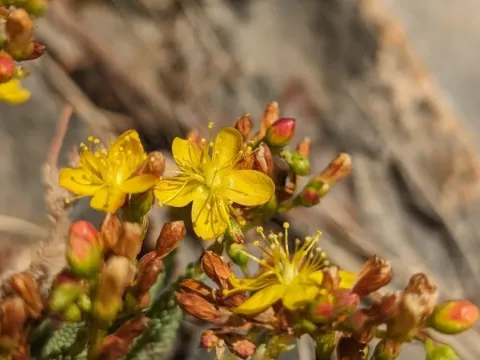
Heather-like St. John's wort
Hypericum ericoides
Hypericum ericoides, commonly known as the Heather-like St. John's wort, is a distinctive semi-shrub belonging to the Hypericaceae family. The plant is botanically recognized by its woody stems covered in small, dense, scale-like leaves, which provide its characteristic heather-like appearance and drought-resistant morphology.
What the section contains
Heather-like St. John's wort
The native distribution of this species spans the Mediterranean basin, where it thrives in rocky, arid, and calciferous terrains. As an agronomical crop, it is highly demanding in terms of light, requiring full sun exposure throughout the day to achieve its metabolic potential and structural integrity.
Regarding soil conditions, this plant necessitates well-draining substrates with an alkaline to neutral pH level. It is naturally adapted to nutrient-poor soils; therefore, over-fertilization, especially with nitrogen-based compounds, can lead to weakened stems and increased susceptibility to physiological disorders.
Climatic requirements involve a preference for arid or semi-arid environments with mild winters. While the species is exceptionally tolerant of heat and water scarcity, it is sensitive to prolonged periods of high humidity and frost, which can cause severe damage to its dense foliage structure.
The economic potential of Hypericum ericoides lies primarily in the herbal medicine sector. The plant contains specific phytochemicals that are valued for their bioactive properties, making it a specialty crop that requires precise harvesting timing to maximize the content of active compounds.
The most significant threat to the cultivation of this species is root rot, typically triggered by poor drainage or excessive soil moisture. Because the plant is native to arid rocky areas, it lacks a high tolerance for waterlogged roots, leading to rapid decline when irrigation is mismanaged.
Pest pressure is generally low, but spider mites can become an issue during excessively hot and dry summer months. Monitoring the plant's health is essential, especially when the environmental conditions favor the rapid reproduction cycles of these tiny arachnids.
Cultural management is the primary line of defense. Ensuring appropriate spacing between rows is vital for ventilation, which prevents the build-up of moisture around the base of the plant, effectively reducing the risk of fungal proliferation within the dense foliage canopy.
Integrated Pest Management (IPM) practices are recommended to protect the quality of the harvested biomass. Biological controls, such as beneficial predatory insects, should be prioritized over broad-spectrum chemicals to ensure the final product meets safety standards for medicinal use.
Maintaining the correct mineral balance in the soil is also a prophylactic measure. Deficiency in essential microelements can weaken the plant's natural defense systems, making it more prone to secondary infections; thus, balanced soil management is key to maintaining a healthy, high-yielding stand.