
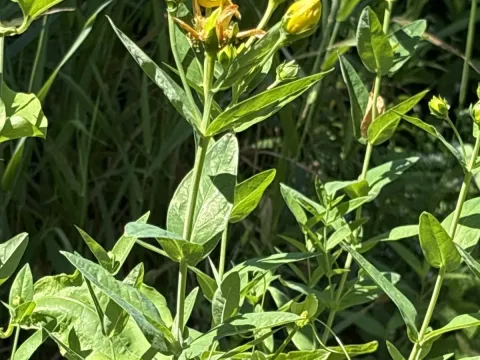
Great St. John's wort
Hypericum ascyron
Great St. John's wort (Hypericum ascyron) is a robust perennial herb belonging to the Hypericaceae family, naturally adapted to moist meadows and riverbanks in its native range.
What the section contains
Great St. John's wort
For successful propagation, seeds require a period of cold stratification; autumn sowing is preferred to utilize natural winter temperatures to break seed dormancy.
If spring sowing is planned, seeds must be stratified in a refrigerator at approximately +4 °C for 60 days before planting to ensure uniform and high-percentage germination.
Surface sowing is critical as the seeds are minute and rely on light exposure to initiate the germination process; they should only be lightly pressed into the soil.
Establishing rows with a spacing of 50 to 60 cm is recommended to facilitate mechanical weeding and ensure adequate airflow between mature plants during the growing season.
This crop thrives best in deep, fertile, and well-draining soils that maintain constant moisture levels, as the plant is susceptible to stress during prolonged dry spells.
While the plant can tolerate partial shade, full sun is optimal for maximizing the production of secondary metabolites, which are essential for its medicinal quality.
Soil pH should ideally be neutral or slightly acidic; heavy clay soils should be avoided or amended with organic matter to improve aeration and prevent root rot.
Great St. John's wort is highly frost-tolerant, making it well-suited for cooler climates, though protection may be needed for young seedlings during unexpected late spring frosts.
Adequate nitrogen and phosphorus levels during the initial growth phase are vital, followed by potash application to promote flower development and plant hardening before winter.
Peak production is typically achieved in the third and fourth years, as the root system matures and the plant density increases sufficiently to cover the assigned area.
Yields of dried biomass can reach 10–15 decitonnes per hectare, provided that irrigation and weed management protocols are strictly followed throughout the season.
The concentration of hypericin and other active compounds is the primary metric for quality; hence, proper timing of the harvest is as important as the total weight of the biomass.
Regular rejuvenation of the plantation by dividing overgrown clumps every few years helps maintain high productivity levels and prevents the decline in plant health.
Strategic harvesting cycles ensure a steady supply of raw materials for the pharmaceutical industry, provided the plants are not over-harvested in a single growing season.
Fungal pathogens such as rust (Uredinales) and various leaf spots are the most common threats, particularly in regions with high humidity and poor plantation hygiene.
Pest pressure from leaf-eating beetles and moth larvae can significantly reduce leaf area and overall biomass quality, necessitating careful monitoring during the active growth phases.
Crop rotation is an essential preventive strategy; replanting in fresh soil every 5–6 years significantly reduces the risk of soil-borne diseases such as Fusarium wilt.
Good plantation design, which allows for proper air circulation, is the most effective natural defense against fungal outbreaks, reducing the need for chemical intervention.
Integrated pest management, including the use of biological control agents, is preferred to maintain the integrity of the herbs intended for therapeutic or pharmaceutical use.
The optimal harvest window is during full bloom, as this is when the density of target medicinal compounds, including flavonoids and hypericins, is at its peak concentration.
Harvesters should collect the top 25–30 cm of the flowering stems, ensuring that enough plant structure remains to facilitate recovery and regrowth for the following cycle.
Drying must occur in low-light, well-ventilated areas or climate-controlled chambers to preserve the chemical potency and the vibrant natural color of the flowers and leaves.
Quality checks during post-harvest processing involve verifying that the material is brittle and snap-dry, with no signs of mold or dark discoloration from overheating.
Finished product storage requires airtight, light-proof containers kept in a cool environment to ensure the longevity of the plant's active constituents until market distribution.