
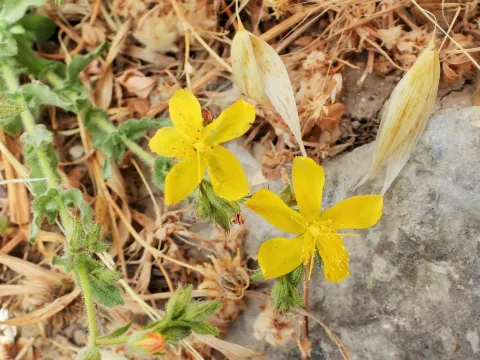
Hairy St. John's wort
Hypericum pubescens
Hairy St. John's wort (Hypericum pubescens) is a perennial herbaceous plant belonging to the Hypericaceae family, recognized by the distinct hairiness on its stems and leaves.
What the section contains
Hairy St. John's wort
Sowing should be performed either in late autumn or early spring, using well-prepared soil to ensure good seed-to-soil contact for optimal germination.
The seeds are very small and must be sown on the surface or covered with a very thin layer of substrate to ensure they have enough light to germinate effectively.
Spacing between rows should be kept at 45 to 60 cm to allow for sufficient air circulation and mechanical weeding as the plants establish themselves.
Consistent moisture is required during the first weeks after sowing until the seedlings develop a robust root system and reach the stage of active growth.
This crop thrives in sunny, well-lit environments and prefers well-drained, fertile soils with a pH ranging from neutral to slightly acidic.
Although it shows some drought tolerance once established, irrigation during peak summer growth is recommended to maximize biomass production.
The ideal temperature range for growth is between 18 and 25 degrees Celsius, with the plant showing resilience to moderate temperature fluctuations.
Poorly drained or waterlogged soils are detrimental to the plant, as they frequently lead to fungal diseases and root decay issues.
Balanced fertilization, particularly with potassium and phosphorus, is essential for improving the plant's structural integrity and concentration of metabolites.
Hairy St. John's wort is primarily cultivated for the pharmaceutical and herbal industry due to its high content of active secondary metabolites.
Crop yield is optimized by proper crop management, including regular weeding and timely fertilization, which helps in achieving higher dry mass production.
Multiple harvests per season are possible under favorable conditions if the initial harvest is conducted correctly to encourage secondary growth.
The economic value of the product depends on the quality and purity of the dried herb, necessitating clean harvesting practices to avoid foreign matter.
Productivity typically stabilizes after the first year as the perennial root system becomes fully established and expands within the field.
Fungal pathogens such as rust and root rot are the primary threats, especially if the plantation is situated in areas with high humidity or poor airflow.
Various insects, including leaf-feeding beetles and aphids, can cause significant damage to the foliage and affect the aesthetic and chemical quality of the harvest.
- Regular field monitoring for signs of pest or disease outbreaks.
- Application of approved biological control agents during early stages.
- Strict adherence to crop rotation to break the cycle of soil-borne pathogens.
Preventative management, including the removal of infected plants, is critical to maintaining a healthy field and preventing the spread of local infestations.
Effective weed management is also necessary to prevent competition for nutrients and water, which otherwise weakens the plants and makes them more susceptible to attack.
Harvesting is performed during the full flowering stage, which is the period when the concentration of essential phytochemicals is at its peak.
The upper 20-30 cm of the flowering stems should be cut, leaving the lower vegetative parts intact to support plant regrowth for the next harvest season.
Post-harvest handling is critical; the fresh material should be transported quickly to drying facilities to avoid heat buildup and degradation.
Controlled drying at temperatures not exceeding 45 degrees Celsius ensures that the herbs retain their color and therapeutic properties effectively.
Final storage must be in cool, dark, and dry conditions using breathable packaging to ensure the shelf-life and chemical stability of the botanical product.