
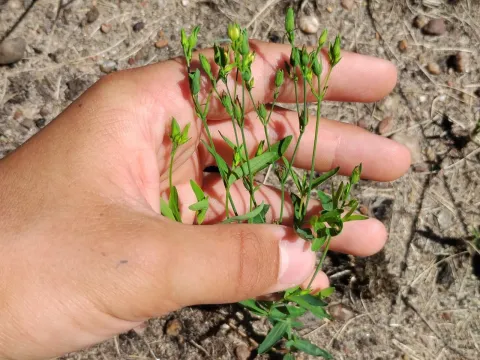
Greater St. John's wort
Hypericum majus
Sowing of Hypericum majus is typically performed in early spring once soil temperatures reach 10-12 degrees Celsius. Late autumn sowing is also an option, allowing for natural stratification of seeds during winter.
What the section contains
Greater St. John's wort
Seeds should be sown at a shallow depth of 0.5–1 cm because of their small size. An optimal planting scheme involves row spacing of 45–60 cm to facilitate proper root development and field maintenance.
Consistent soil moisture is essential for the germination period, which usually lasts between 14 to 20 days depending on the thermal conditions.
During the first year, growth is characterized by the formation of basal leaf rosettes; therefore, effective weed control is vital during this establishment phase.
The standard seeding rate is generally 1 to 2 kg per hectare, adjusted based on seed viability and the selected method of field sowing.
Greater St. John's wort thrives in well-lit environments and requires full sun exposure to maximize the synthesis of bioactive compounds within the leaves.
The plant, belonging to the Hypericaceae family, prefers loose, loamy, or sandy soils with a neutral or slightly acidic pH level for optimal growth.
While the species exhibits moderate drought tolerance, adequate irrigation is necessary during dry spells to ensure high biomass production and plant vitality.
Fields designated for this crop must have good drainage, as stagnant water near the root crown quickly promotes rot and can kill the plant population.
It is a highly adaptable plant suitable for temperate climates, showing good winter hardiness throughout the growing regions in the Northern Hemisphere.
Crop yields begin to stabilize by the second year of cultivation once the plant has established a robust and deep root system in the soil.
Commercial plantations can typically expect a yield ranging from 5 to 10 tons of fresh green mass per hectare during a single growing season.
Dried product output is approximately 20-25% of the fresh harvested weight, depending on the stage of maturity at the time of harvesting.
Productivity is significantly enhanced by the application of nitrogen-phosphorus fertilizers during the early spring re-growth phase.
Multi-year stands are most productive between the third and fifth years of life, after which plantation renewal is generally recommended to maintain quality.
Rust is the most common fungal disease affecting Hypericum species, causing leaf lesions that significantly decrease the value of the raw medicinal material.
In high-humidity environments, powdery mildew may develop, appearing as a white powdery layer on the surface of the leaves and affecting photosynthesis.
Root rot, often caused by excessive irrigation or poor soil structure, represents a major threat to young seedlings and established plants alike.
Common pests include leaf beetles and aphids, which feed on succulent parts of the plant and can cause stunted growth if not managed promptly.
Standard integrated pest management practices include crop rotation and regular cultivation between rows to ensure good air circulation within the canopy.
Harvesting should coincide with the peak flowering stage, as this is when the concentration of essential secondary metabolites is highest in the plant tissue.
Plants are harvested by mowing the stems at a height of 10–15 cm, which protects the basal buds and allows for potential re-growth of the crop.
After harvesting, the green mass must be moved immediately to drying facilities and spread in thin layers in shaded, well-ventilated areas.
Temperature control during the drying process is critical; levels should remain below 45 degrees Celsius to preserve the chemical integrity of the herbs.
Two harvests per season are feasible in many regions, providing an efficient way to maximize yield and optimize the use of cultivated land.