
Flax-leaved St. John's-wort
Hypericum linariifolium
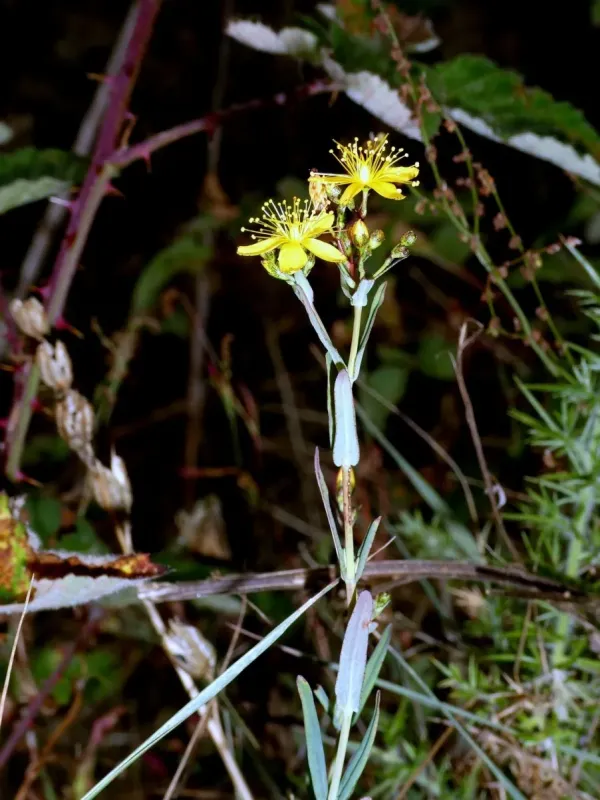
Description
Sowing dates
Sowing flax-leaved St. John's-wort requires careful attention to soil preparation and seed quality. Given the small size of the seeds, they should be sown shallowly, ideally at a depth of no more than 0.5 centimeters to ensure optimal germination rates.
The seeds are often sown in rows with a spacing of 45 to 60 centimeters, which allows for easier maintenance and mechanized weeding between the rows. Spring sowing, after the soil has warmed up, is generally considered the most effective time.
Maintaining soil moisture during the first few weeks after sowing is crucial. The seeds are sensitive to desiccation, so frequent but gentle irrigation is recommended to support the establishment of young seedlings.
Germination typically occurs within two to three weeks under optimal temperatures of approximately 20 degrees Celsius. Seedling development is slow in the early stages, requiring constant protection from competing weeds.
Thinning the seedlings is an essential practice once the plants have developed their first few sets of true leaves. Proper spacing ensures that each plant receives adequate access to nutrients and light, promoting stronger future growth.
Growing requirements
Flax-leaved St. John's-wort, a member of the Hyperiaceae family, is a perennial herb known for its specific ecological niche. It naturally thrives in regions with acidic to neutral, well-drained soils, often found in rocky or sandy terrain.
The crop requires full sun exposure to flourish and maintain its structural integrity. Partial shade will often lead to etiolation, where the plant becomes leggy and produces lower quality biomass, affecting its chemical composition.
Regarding soil, the plant is adaptable to nutrient-poor substrates but shows a preference for lighter, porous soils. Good drainage is paramount, as the species is highly sensitive to waterlogging and anaerobic conditions in the root zone.
Climate-wise, the species is moderately hardy and capable of surviving diverse temperature regimes typical of its native distribution. However, in colder agricultural zones, mulching may be necessary to protect the root systems during winter.
Aerate the soil regularly to prevent compaction. Proper mechanical cultivation between rows helps improve oxygen availability to the roots, which is a fundamental requirement for the healthy physiological function of the plant.
Main diseases and pests
Fungal pathogens such as Fusarium species pose a significant threat to flax-leaved St. John's-wort, especially in poorly drained soils. Over-irrigation is a primary driver for disease outbreaks in agricultural settings.
Insect pests, particularly leaf-eating beetles, can cause substantial damage to the foliage during the peak growing season. Integrated pest management strategies are recommended to keep populations below the economic injury level.
Weed competition is a major challenge, especially during the first year of crop establishment. Since the plant is slow-growing initially, timely weeding is essential to prevent resources from being hijacked by aggressive invasive grasses.
Preventative measures include crop rotation and ensuring the use of certified, disease-free planting materials. Regular field monitoring by an agronomist is necessary to catch and treat early signs of infection or infestation.
Sanitation practices involve the removal and safe disposal of infected plant material from the field. Keeping the field clear of debris significantly reduces the chances of overwintering pathogens for the next growing season.
Harvesting
The harvest should be conducted during the peak of the flowering phase, as this is when the concentration of the plant's valuable secondary metabolites is highest. Timing is critical to ensure high-quality produce.
Cutting should be performed at a height of about 10 to 15 centimeters above the soil surface. This height preserves the lower buds, allowing the plant to recover and potentially produce a secondary harvest or prepare for winter dormancy.
Immediate post-harvest processing is required. The material must be transferred quickly to a drying facility, where air circulation and temperature control are maintained to prevent spoilage and enzymatic degradation.
Drying the harvested material at temperatures not exceeding 40 degrees Celsius helps retain the natural color and potency of the plant. Proper storage in a cool, dark, and dry environment is essential to ensure long-term shelf life.
With correct harvesting techniques and post-harvest management, a single field can remain productive for several years. Rejuvenation of the stand or moving to a new plot may be necessary after four to five years of continuous production.