
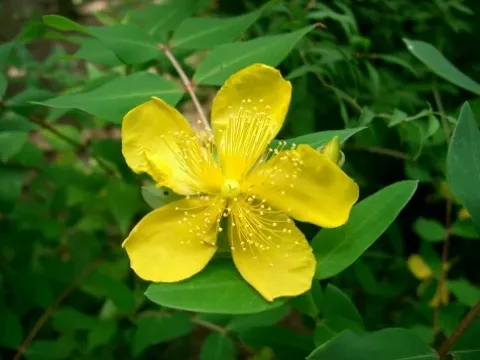
Goldencup St. John's wort
Hypericum monogynum
Sowing of Hypericum monogynum is typically performed in early spring, once the danger of severe frost has passed. Seeds are small and require a light, well-draining substrate to ensure successful germination and early development.
What the section contains
Goldencup St. John's wort
For greenhouse cultivation, seeds should be sown in late winter or early spring using specialized seed trays. It is essential to keep the surface moist and provide adequate light, as the seeds are photoblastic and require light to break dormancy.
Outdoor sowing requires a prepared bed with a fine tilth. The seeds should be lightly covered with a thin layer of sand or vermiculite to prevent them from washing away while maintaining contact with the moist soil.
Germination usually takes several weeks under stable temperatures around 20 degrees Celsius. Once the seedlings develop their first true leaves, they can be thinned or transplanted into individual pots to strengthen their root systems.
Direct field sowing is possible but less common due to the small size of the seeds. It is recommended to establish a nursery bed where plants can grow for a season before being moved to their permanent location in the field or garden.
Hypericum monogynum, a member of the Hypericaceae family, thrives in sunny or partially shaded environments. It is a semi-evergreen shrub that adapts well to various climates, though it prefers moderate conditions with sufficient moisture.
The ideal soil for this crop is well-drained, fertile, and slightly acidic to neutral. Heavy, waterlogged soils should be avoided, as the root system is susceptible to decay if exposed to prolonged periods of standing water.
Regular pruning is a vital part of the agricultural management of this plant. Trimming back the stems in early spring encourages denser branching and more prolific flowering, which is essential for both ornamental and production purposes.
Watering requirements are moderate; the plant shows good resilience to temporary drought once fully established. However, during the peak summer heat, deep watering is necessary to prevent wilting and promote continuous growth.
Maintenance also involves monitoring soil fertility levels. An application of balanced slow-release fertilizer in early spring provides the necessary nutrients to support the plant's metabolic processes and seasonal flower production.
The plant is generally robust, but it can be susceptible to fungal diseases in high-humidity areas. Rust and leaf spot are the most common pathogens that can affect the foliage if air circulation is inadequate.
Pests such as aphids and spider mites can occasionally infest the young, tender growth during the early summer months. Using insecticidal soaps or neem oil is usually sufficient to control these minor infestations effectively.
Root rot caused by poor soil drainage remains the most significant threat to the plant's health. To mitigate this risk, farmers must ensure that the cultivation site has proper soil structure or install artificial drainage systems if necessary.
Regular monitoring for early signs of infection is critical. Removing and disposing of any diseased branches or leaves helps prevent the spread of pathogens throughout the entire plantation, maintaining crop health.
Integrated Pest Management (IPM) practices, such as encouraging beneficial insects and choosing resistant varieties, are highly recommended to reduce the need for chemical interventions and support sustainable cultivation.