
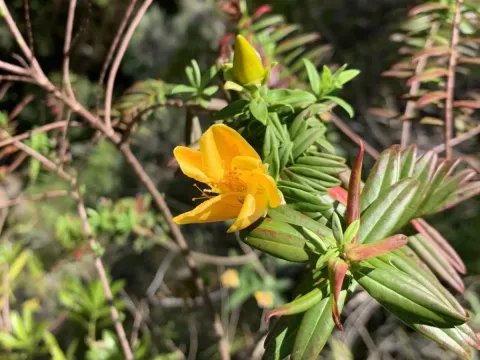
Hypericum lanceolatum
Hypericum lanceolatum
Hypericum lanceolatum is a perennial shrub belonging to the Hypericaceae family. In agricultural practices, propagation is typically achieved through seed germination or vegetative cuttings, depending on the scale and purpose of the plantation.
What the section contains
Hypericum lanceolatum
Seeds are extremely small and require a specific planting method. They should be sown on the surface of a prepared seedbed without deep covering, ensuring they remain in contact with moist soil until germination occurs.
Spring sowing is the most effective time to establish a new crop. This timing allows the plants to develop a robust root system before the onset of the next winter, ensuring higher survival rates for young seedlings.
Vegetative propagation using semi-hardwood cuttings is also common for maintaining clonal uniformity. Cuttings are typically taken in early summer and placed in a high-humidity environment until roots are established.
Proper spacing is crucial for plant development. A distance of at least 50 to 70 centimeters between plants ensures adequate air circulation, which is essential to prevent fungal diseases in dense foliage crops.
Hypericum lanceolatum thrives in full sun exposure. While the plant can tolerate light shade, excessive darkness results in leggy growth and significantly lower concentrations of active secondary metabolites.
The ideal soil for this species is well-drained, sandy loam or loamy soil. Waterlogging must be avoided at all costs, as the root system is highly susceptible to rot under anaerobic conditions.
The plant demonstrates a preference for neutral to slightly acidic soil pH. Before establishing a field, soil testing is recommended to ensure that nutrients are readily available for plant uptake.
Regular irrigation is necessary, particularly during the active growing phase and the flowering period. While established plants are somewhat drought-tolerant, consistent moisture leads to higher biomass production.
Maintenance involves frequent weeding during the early stages of growth. Because the plant has a relatively shallow root system, mechanical weeding must be performed with care to avoid damage to the root zone.
The primary economic value of Hypericum lanceolatum lies in its medicinal properties, specifically the presence of hypericin and various flavonoids. Harvesting is conducted at the peak of the flowering stage.
For efficient production, harvesting involves cutting the upper portions of the shoots. Depending on the climate and growth rate, multiple harvests can be obtained within a single growing season.
Post-harvest handling is critical for maintaining quality. The raw material must be dried quickly in a well-ventilated, shaded area or using professional drying equipment at controlled temperatures to prevent degradation.
Yield stability is usually achieved from the third year of cultivation. Proper pruning after the harvest encourages vigorous regrowth for the following season, contributing to the long-term productivity of the plantation.
The final product is typically processed into dried herbs, extracts, or essential oils, which are highly sought after by the pharmaceutical and cosmetic industries for their therapeutic applications.
Fungal pathogens, such as rust and root rot, represent the most significant threat to Hypericum lanceolatum crops. These issues are often exacerbated by poor field drainage and inadequate spacing between plants.
Insect pests, including leaf-eating beetles and aphids, can cause significant damage to the foliage. Monitoring programs are essential to detect infestations early and minimize their impact on the final harvest.
Integrated pest management strategies are encouraged to protect the crop. Biological control agents are often effective alternatives to chemical pesticides, especially when the crop is intended for medicinal consumption.
Winter survival is a concern in colder climates. Applying mulch around the base of the plants in late autumn can provide necessary insulation for the roots against freezing temperatures.
Competition from weeds is a constant challenge. If not managed properly, weeds can outcompete the crop for nutrients and light, drastically reducing both the quality and quantity of the produced herb.