
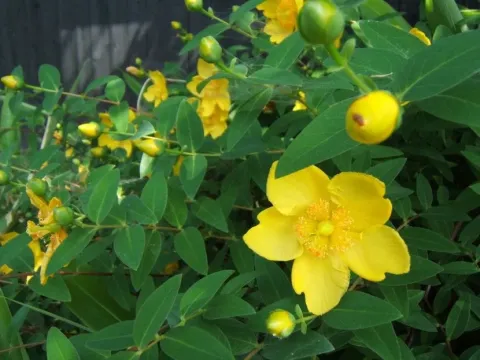
Hypericum leschenaultii
Hypericum leschenaultii
Sowing Hypericum leschenaultii is best performed during the autumn or early spring period once the soil temperature is stable. Since the seeds are extremely small, they require surface sowing with very shallow covering, as they need light to trigger the germination process successfully.
What the section contains
Hypericum leschenaultii
When using a greenhouse for starter plants, sowing in March within lightweight, well-aerated substrates provides the best results. Maintaining consistent moisture levels is vital during this phase to ensure that the delicate seedlings develop a strong root system before they are transplanted to the field.
In a commercial farming setting, precise spacing is critical. A pattern of 50-60 cm between rows and 25-30 cm between plants is generally recommended. This density helps in suppressing weed growth and creates a closed canopy that protects the soil surface from drying out too quickly.
Stratification of seeds prior to planting is highly recommended to overcome dormancy. This practice simulates natural overwintering conditions, leading to significantly higher germination rates and more uniform emergence, which is essential for uniform growth and harvesting schedules across the entire plantation.
Post-emergence management involves careful thinning to ensure that individual plants have enough space to develop their floral branches. Avoiding overcrowding is essential, as poor air circulation can lead to moisture buildup, increasing the likelihood of pathogen pressure during the early vegetative stages.
Hypericum leschenaultii, a member of the Hypericaceae family, is native to high-altitude regions such as Java. It thrives in cooler climates and requires moderate temperatures for optimal metabolic activity, meaning it should be protected from extreme heat waves that could hinder its growth.
The plant prefers fertile, well-draining soils with a pH ranging from slightly acidic to neutral. Soil structure should be light and porous to prevent waterlogging, as excessive soil moisture is one of the primary limiting factors for the healthy development of this perennial herb.
As a light-demanding species, this plant requires full sun exposure for most of the day. Proper sunlight intensity is directly linked to the synthesis of secondary metabolites, which are the main components that provide the plant its medicinal and economic value for the herbal industry.
Water requirements should be balanced. While consistent moisture is needed during the peak growing season, the soil must be allowed to breathe between irrigation cycles. Drip irrigation systems are the preferred method for commercial plots to avoid wetting the foliage, which reduces disease risk.
Fertilization should be handled with caution, focusing on balanced nutrient supply rather than excessive nitrogen. Over-fertilization can promote rapid vegetative expansion at the expense of flowering density, so it is better to provide organic compost or slow-release fertilizers during the early spring.
Root rot is the most common threat to this crop, usually caused by poor drainage or over-irrigation. Proper soil preparation before planting and the implementation of raised beds are the best preventative measures to protect the root systems from anaerobic conditions and fungal attacks.
Pests like aphids and leaf-eating beetles can cause considerable damage to the foliage and flower buds. Integrated Pest Management (IPM) strategies, including the use of beneficial insects and biological controls, are preferred over synthetic pesticides to maintain the high quality of the medicinal harvest.
Rust diseases can occur under conditions of high humidity and poor ventilation. Keeping the planting area clean and promptly removing any infected plant material helps prevent the rapid spread of fungal spores across the field, keeping the plantation healthy throughout the growing season.
Weed competition is a significant concern for the young crop. Regular cultivation between rows is necessary to minimize competition for nutrients and sunlight. Keeping the crop area clean also promotes better air circulation, which naturally lowers the humidity levels around the plants.
Botrytis, or grey mold, may affect the blossoms during rainy periods. Improving airflow by managing plant density and ensuring proper drainage are effective ways to mitigate this risk. In cases of severe outbreaks, selective pruning of infected parts is necessary to preserve the rest of the stand.
Harvesting should coincide with the plant's peak flowering phase when the concentration of its characteristic active compounds is at its highest level. For most commercial producers, this is the most profitable time to cut the stalks, ensuring the product meets pharmaceutical quality standards.
The standard harvesting technique involves cutting the top 20-30 cm of the flowering stems. Whether using mechanical harvesters or manual tools, the goal is to obtain clean material with minimal woody stem content, as the active principles are concentrated in the leaves and the flowers.
Post-harvest processing requires immediate drying to prevent degradation of the plant material. The stems should be dried in a well-ventilated, shaded area or an industrial dryer set at 35-40 degrees Celsius. Rapid drying is key to maintaining the natural color and potency of the herb.
After the material has reached a moisture content suitable for storage, it should be carefully cleaned of any foreign matter and packed. Using airtight and light-protected containers helps preserve the quality of the dried herb for a long period, ensuring it remains viable for trade.
With careful after-harvest care, such as light irrigation and fertilization, the plantation can often produce a second crop later in the season. Although the second flowering may be less intense, it contributes to the overall yield and increases the efficiency of the land use for the farm.