
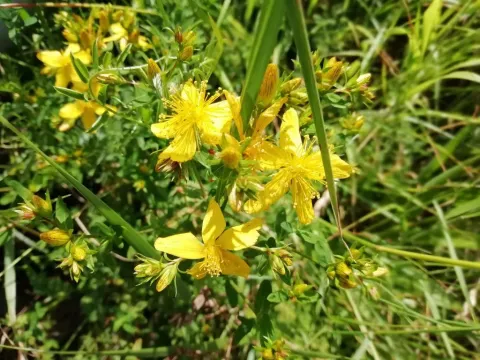
Hypericum monanthemum
Hypericum monanthemum
Sowing Hypericum monanthemum is best performed in early spring, once the soil has sufficiently warmed up to encourage rapid germination. Proper seedbed preparation is essential for this small-seeded species.
What the section contains
Hypericum monanthemum
The seeds should be sown at a shallow depth of approximately 0.5 to 1 centimeter to ensure they receive enough light while maintaining necessary moisture levels for sprouting.
Row spacing should be maintained between 45 and 60 centimeters. This provides sufficient room for plant growth and allows for easy mechanical cultivation to manage weeds effectively.
In regions with milder winters, late autumn sowing can be a viable strategy, allowing seeds to naturally stratify and germinate as soon as conditions become favorable in the spring.
After sowing, lightly compacting the soil surface helps improve seed-to-soil contact, which is vital for achieving a uniform plant stand across the entire field.
Hypericum monanthemum belongs to the Hypericaceae family and thrives in open, sunny locations. Exposure to full sunlight is crucial for the development of secondary metabolites and high-quality biomass.
The crop prefers well-drained loamy or sandy soils with a neutral to slightly acidic pH level. It is highly sensitive to waterlogging, which can cause root rot and significantly hinder productivity.
This species is well-adapted to temperate climates and can withstand varying temperature conditions, though it performs best in regions with consistent rainfall during the active growing season.
Soil fertility management should focus on incorporating organic matter before planting, as healthy soil structure supports the longevity of the perennial root system of this plant.
- Light: Full sun exposure is mandatory.
- Soil: Well-drained, fertile sandy loam.
- Drainage: Critical to prevent root diseases.
- Climate: Temperate, avoiding extreme stagnation.
Harvesting is performed during the full blooming phase, when the concentration of bioactive compounds in the flowering tops is at its peak. The stems are typically cut at a height of 20-30 centimeters.
Yields are optimized from the second year onwards. With appropriate care and fertilization, the plantation can remain productive for several years before needing rejuvenation.
Immediate post-harvest processing is essential; the harvested material should be moved to shaded, well-ventilated drying facilities to preserve the plant's natural properties and quality.
Industrial yields vary based on environmental factors, typically producing between 1.5 to 2.5 tonnes of dry raw material per hectare under favorable management practices.
Monitoring the moisture content during storage is important to prevent spoilage and ensure the final product meets the required industry standards for herbal supplies.
Fungal diseases, particularly those affecting the root and lower stems, pose the greatest threat to Hypericum monanthemum, especially in fields with poor drainage or high humidity.
Leaf-eating insects and aphids are the most common pests that can reduce foliage volume, requiring integrated pest management strategies to maintain plant health.
Preventative measures, such as maintaining appropriate row spacing for good air circulation and strictly following crop rotation cycles, are fundamental to disease prevention.
The use of biological control agents and organic-compliant pesticides is recommended to protect the crop while ensuring the final harvest remains suitable for medicinal applications.
Regular field scouting is necessary to identify early signs of infestations or infections, allowing for targeted intervention before the problem spreads across the plantation.