
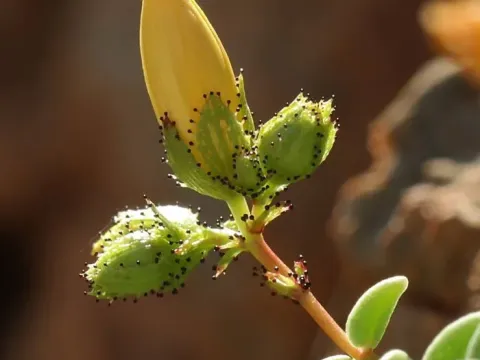
Hypericum fragile
Hypericum fragile
Hypericum fragile, commonly known as the fragile St. John's wort, is a perennial subshrub belonging to the Hypericaceae family. Native to the rocky slopes and limestone outcrops of the Balkan Peninsula, this species is highly valued in rock gardens for its low-growing, mat-forming habit and aesthetic appeal.
What the section contains
Hypericum fragile
The botanical structure of the plant features delicate stems and small, glaucous leaves that maintain a neat appearance throughout the growing season. Its signature yellow, five-petaled flowers bloom throughout the early and mid-summer, providing a vibrant contrast to the foliage and attracting various pollinators to the garden.
Cultivation of this species requires a location that mimics its natural habitat: full sun is non-negotiable for consistent blooming and structural integrity. Shade will inevitably cause the plant to become leggy and lose its characteristic dense, cushion-like growth form, making it susceptible to stem breakage.
Soil drainage is the most critical factor in the plant's survival. Hypericum fragile thrives in gritty, alkaline, and nutrient-poor soils. Heavy clay or wet soils will almost certainly cause root rot. Therefore, gardeners are advised to incorporate significant amounts of gravel or coarse sand into the planting hole.
Watering should be managed carefully, ensuring the soil dries out between intervals. This plant is well-adapted to drought, making it an excellent candidate for xeriscaping or low-maintenance garden designs. Winter care involves ensuring the crown of the plant remains dry to prevent damage from freezing and thawing cycles.
Root rot, specifically caused by overwatering or poor drainage, is the primary threat to the longevity of Hypericum fragile. Once the root system is compromised by fungal pathogens in waterlogged soil, the plant usually exhibits yellowing and rapid wilting, leading to total collapse.
Powdery mildew can occasionally appear during periods of high humidity and poor air circulation. While rarely fatal, it significantly diminishes the plant's ornamental value. Pruning back dense growth can improve airflow and reduce the incidence of such fungal infections.
Insect pests such as aphids may occasionally congregate on the tender new growth during the spring season. These insects feed on plant sap and can cause leaf curling. Regular inspection and the use of insecticidal soap are typically sufficient to control minor infestations.
Leaf-feeding caterpillars can be an issue in some environments, as they may consume foliage and disrupt the symmetry of the plant. If spotted early, manual removal is the most effective and eco-friendly method for managing these sporadic outbreaks without affecting beneficial insects.
To avoid recurring problems, maintain a clean planting area by removing debris around the base of the plant. A healthy, stress-free specimen planted in optimal conditions will demonstrate a high degree of natural resistance to most common garden pests and diseases.