
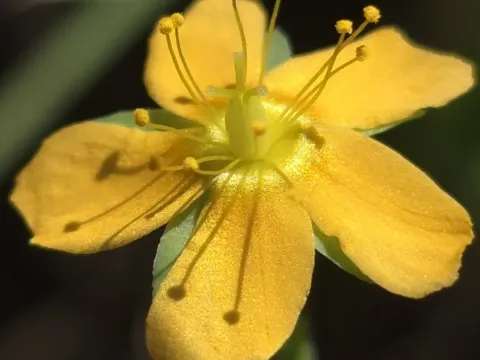
Hypericum gramineum
Hypericum gramineum
Hypericum gramineum, belonging to the Hypericaceae family, is a herbaceous perennial that has gained attention for its specific botanical and medicinal properties. This species is native to diverse regions and requires careful attention to its early growth stages to ensure success.
What the section contains
Hypericum gramineum
The sowing process is typically initiated in early spring. Due to the very small size of the seeds, they should be sown on the surface of well-prepared, fine-textured soil and pressed lightly to ensure good contact. Deep burial of seeds often results in poor germination rates.
Maintaining proper spacing is critical for long-term health. Seeds should be sown in rows with enough space between them to allow for later cultivation and weed control. Uniform moisture is essential during the germination phase, which can take several weeks depending on soil temperatures.
Farmers often use precision seeders calibrated for small seeds to ensure even distribution. In regions with long growing seasons, early sowing allows the plants to establish a robust root system before the onset of extreme summer heat.
After the establishment of seedlings, irrigation should be carefully managed to support growth without causing waterlogging, which the species does not tolerate well in its initial development phase.
Hypericum gramineum thrives in sunny, open locations. It is a heliophilic plant, meaning it requires full exposure to sunlight for most of the day to maximize the production of its characteristic secondary metabolites.
The ideal soil conditions for this crop involve well-drained loamy or sandy soils. Good aeration is vital to prevent root rot, which is a common issue in compacted or overly heavy, water-retaining soils. A neutral pH level is preferred for optimal nutrient uptake.
Temperature requirements are moderate; the plant grows best within a range of 18 to 25 degrees Celsius. While it can handle minor fluctuations, extremely high heat coupled with high humidity can stress the plant and make it susceptible to foliage diseases.
Water requirements should be balanced. While it does not like constant moisture, the plant needs consistent water during the vegetative growth stage. Mulching can be used to regulate soil temperature and moisture levels, significantly improving crop vigor.
Nutrient management involves applying potassium and phosphorus-rich fertilizers, which support plant structure and reproductive health. Excessive nitrogen should be avoided as it leads to excessive leaf growth at the expense of floral development.
Yield estimations for Hypericum gramineum are based on dry weight per hectare. Depending on environmental factors and management, farmers can expect a steady yield that improves as the plant reaches maturity in its second or third year.
The concentration of beneficial compounds is highest during the flowering period, making it the most important time for harvest. Timing is everything; delaying harvest beyond the peak of flowering will result in decreased product quality.
Proper harvest intervals can stimulate secondary growth in the same season, provided the environmental conditions are favorable. However, intensive harvesting requires adequate fertilization to restore the plant's nutrient stores for subsequent cycles.
Yield quality is evaluated by the greenness of the leaves and the integrity of the flowers after processing. Contamination with soil or other plant debris during mechanical harvesting must be minimized through careful field management.
Effective yield management includes crop rotation every few years to maintain soil fertility and break the life cycles of specific plant pathogens that may accumulate in the soil over time.
Fungal diseases are the primary threats to Hypericum gramineum, especially powdery mildew and various root rots triggered by high moisture and poor circulation. Implementing good ventilation by maintaining proper row spacing is a key preventative measure.
Pests such as aphids and certain leaf-eating beetles can cause significant damage to the plant's aesthetic and chemical value. Integrated pest management strategies, focusing on biological controls, are preferred over broad-spectrum chemicals.
Weed competition represents a major challenge, particularly for younger plants. If not addressed, weeds can compete for light, water, and nutrients, drastically reducing the overall yield and making mechanical harvesting more difficult.
In certain sandy environments, nematode infestation may affect the root system, leading to stunted growth. Using clean, pathogen-free seed stock and maintaining healthy soil biological activity are the best strategies to mitigate this risk.
Environmental stressors such as sudden drought or extreme heat can lower the plant's resistance, making it more prone to opportunistic infections. Monitoring for early signs of disease is essential for maintaining a healthy and productive crop.
Harvesting is executed during the full bloom phase when the plant's bioactive concentration is at its peak. Mechanical harvesting methods are typically employed for larger operations, cutting the upper part of the stem to protect the main root system.
After harvesting, the biomass must be transported to a drying facility immediately. Allowing the cut material to sit in piles leads to heating, which degrades the volatile oils and reduces the color quality of the raw material.
Drying should occur in shaded, well-ventilated conditions or controlled-temperature drying chambers. The temperature must not exceed 45 degrees Celsius to preserve the delicate compounds essential for the plant's commercial value.
Once dried, the plant material is sorted to remove impurities such as weeds, dust, or woody stem sections. This ensures that the final product meets standard pharmaceutical or herbal market specifications.
Storage should be conducted in clean, cool, and dry containers, protected from light. Proper storage conditions ensure the longevity of the plant's qualities, allowing for safe distribution and consumption throughout the year.