
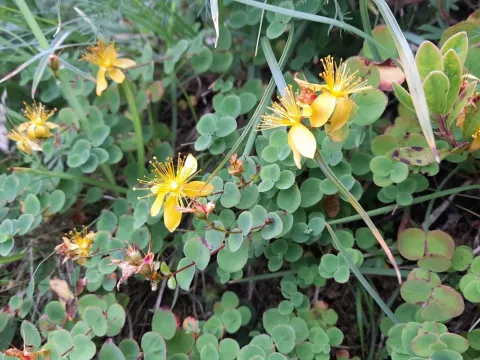
Hypericum nummularium
Hypericum nummularium
Hypericum nummularium is typically propagated via seeds, which require stratification to break dormancy and ensure high germination rates before sowing.
What the section contains
Hypericum nummularium
Sowing is best performed in early spring or late autumn, using well-drained, porous growing media to mimic the plant's natural habitat.
When starting from seeds, maintain consistent moisture levels without waterlogging, as the seedlings are sensitive to excess humidity during their early stages.
Once the plants have reached a suitable size, they should be transplanted to their final location, ensuring adequate spacing to promote healthy growth and air circulation.
Vegetative propagation via cuttings is also an effective method for maintaining the genetic consistency of specific ornamental cultivars of this species.
Belonging to the Hypericaceae family, this species is well-adapted to rocky, calciferous substrates, requiring excellent drainage to thrive.
The ideal environment consists of full sun exposure, although the plant can tolerate partial shade in hotter climates to prevent heat stress on foliage.
Soil pH should ideally be neutral or slightly alkaline, reflecting the plant's natural preference for rocky limestone formations in its native range.
Temperature tolerance is high, as the species is accustomed to alpine and mountainous climates with significant diurnal temperature fluctuations.
Water requirements are moderate; established plants show good drought resistance, though supplemental irrigation may be necessary during prolonged dry spells.
While primarily valued for its ornamental role in rock gardens, the plant has potential applications in the harvesting of herbal biomass.
Harvesting for medicinal purposes occurs during peak flowering, ensuring that only healthy, undamaged stems are collected to maintain quality.
Post-harvest processing involves rapid drying in a shaded, well-ventilated area to preserve the integrity of the secondary metabolites found within the tissues.
Ornamental maintenance involves deadheading spent flowers, which not only keeps the garden neat but also redirects energy into root and leaf growth.
Properly dried material should be stored in cool, dark environments to extend its shelf life and maintain its biological potency for future use.
The most significant threat to this species is the incidence of fungal pathogens, particularly root rot, induced by poor soil drainage and excessive humidity.
Common pests, such as aphids and spider mites, can cause damage to the leaves, particularly in greenhouse conditions or during unusually warm and dry seasons.
Cultural control measures, such as proper irrigation management and adequate spacing, are the most effective ways to mitigate disease risks.
Integrated pest management strategies should be employed if infestation levels exceed economic or aesthetic thresholds, utilizing eco-friendly solutions where possible.
- Maintaining proper soil structure and aeration.
- Regular inspection for early signs of fungal infection.
- Prevention of overcrowding in decorative plantings.