
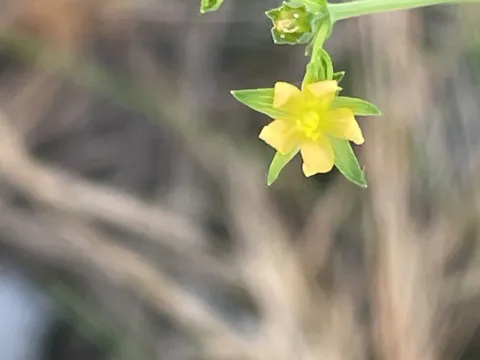
Hypericum gymnanthum
Hypericum gymnanthum
Sowing Hypericum gymnanthum typically takes place in early spring or late autumn to allow the seeds to benefit from natural stratification if necessary.
What the section contains
Hypericum gymnanthum
Due to the small size of the seeds, they should be sown at a very shallow depth, barely covered with soil, to ensure they receive enough light to trigger germination.
Using a precision seeder is recommended to maintain an even distribution of seeds, which facilitates optimal plant density and uniform growth across the field.
Soil preparation before sowing should include light harrowing to create a fine tilth, which helps in establishing good contact between the seed and the soil particles.
Following the sowing process, a light roller pass is often beneficial to improve moisture retention around the seeds, which is crucial for uniform emergence.
Hypericum gymnanthum, a member of the Hypericaceae family, thrives in sunny locations with well-drained, fertile soil, ideally with a neutral to slightly acidic pH.
The crop demands adequate moisture throughout the growing season but is highly intolerant of waterlogged soil, which can lead to rapid root degradation.
Wind protection is essential, especially in areas with strong prevailing winds, as the slender stems of the plant can be easily damaged, reducing crop quality.
Consistent soil fertility management, through either balanced organic amendments or controlled mineral fertilizers, is necessary to support high biomass production.
The plant performs best under moderate temperatures, avoiding extreme heat or late frosts, which can interfere with the flowering and accumulation of secondary metabolites.
The primary threats include fungal diseases such as root rot and powdery mildew, which are often exacerbated by high humidity and poor air circulation within the canopy.
Pests like aphids and leaf beetles can cause significant damage to the foliage, necessitating regular field monitoring and, if required, targeted integrated pest management strategies.
Weed competition is a major challenge during the early stages of establishment; therefore, mechanical cultivation between rows is standard practice to control invasive species.
Strategic crop rotation is recommended to break pest and disease cycles that are specific to the Hypericaceae family, enhancing the overall health of the agricultural land.
Sanitation of the tools and equipment used for cultivation is vital to prevent the spread of soil-borne pathogens across different sections of the farm.
Harvesting is typically timed for the peak flowering phase, when the concentration of essential bio-active compounds in the aerial parts is at its maximum level.
Mowing should be carried out at a height that allows the plant to recover and produce secondary growth, usually leaving about 10–15 cm of stem above the ground.
Immediate post-harvest processing is critical; the harvested material should be transported to drying facilities without delay to maintain freshness and oil quality.
Drying must occur in a well-ventilated environment at temperatures strictly controlled below 45 degrees Celsius to prevent the oxidation of medicinal compounds.
Once dried to the correct moisture content, the product should be stored in cool, dark, and dry conditions to ensure long-term shelf stability and potency.