
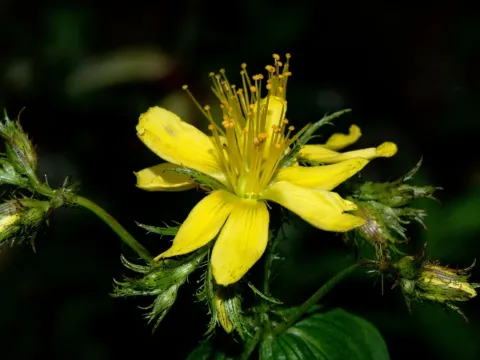
Hypericum elodeoides
Hypericum elodeoides
Hypericum elodeoides is a perennial herb belonging to the Hypericaceae family. Establishing a plantation requires careful attention to seed selection and soil preparation to ensure successful long-term production of this medicinal crop.
What the section contains
Hypericum elodeoides
Sowing should ideally occur in late autumn to utilize natural stratification, which is essential for uniform germination in the spring. If spring sowing is planned, seeds must be cold-stratified for several weeks before planting.
The seeds are exceptionally small, requiring a shallow sowing depth of no more than 0.5 cm. Covering them with a thin layer of fine soil or vermiculite helps maintain consistent moisture levels without preventing light penetration.
Transplanting seedlings from a nursery is a common strategy to maximize survival rates. Seedlings are usually ready for field transfer when they reach the 3-4 true leaf stage, ensuring a robust root system before exposure to field conditions.
Standard row spacing is set between 45 cm and 60 cm. This layout accommodates mechanical weeding equipment while ensuring each plant has adequate space to develop a full, bushy structure during its growth cycle.
The crop thrives in temperate climates with full sun exposure. While it is relatively resilient, the best yields are obtained in environments with moderate summer temperatures and regular precipitation throughout the growing season.
Well-drained, loamy, or sandy soils are preferred for the cultivation of Hypericum elodeoides. It is highly sensitive to waterlogged conditions, which often cause severe root damage and increase susceptibility to soil-borne diseases.
The soil pH should be maintained in the range of 5.5 to 7.0. Adding well-rotted organic matter before planting improves soil structure and nutrient availability, which supports healthy growth over the plant's multi-year lifespan.
During the early establishment phase, weed control is of paramount importance. The young plants grow relatively slowly at first and can easily be outcompeted by aggressive weeds if the field is not managed properly.
Proper irrigation management is vital during the peak growing phase. While the plants require steady moisture, excess water should be avoided to prevent decay. Monitoring soil moisture levels helps to determine the frequency of irrigation needed.
Fusarium wilt represents one of the most significant threats to the crop. This fungal disease affects the plant's vascular system, often leading to rapid wilting and total loss of the harvest if not managed early.
Powdery mildew is another common concern, especially in dense plantings with restricted airflow. The disease manifests as a powdery coating on the leaves, which can severely hinder the plant's photosynthetic efficiency.
Various insect pests, including aphids and leaf-eating beetles, may infest the crop during the spring and early summer. Scouting programs should be implemented to identify these pests before they reach economic injury levels.
Root rot is frequently associated with poor field drainage or over-irrigation. Proper site selection and careful irrigation scheduling are the primary defenses against this persistent agricultural problem.
A structured crop rotation plan is the best way to prevent the buildup of soil-borne pathogens. Integrating a 4 to 5-year cycle keeps the field healthy and reduces the reliance on chemical control methods.
The harvest is timed to coincide with the peak flowering phase of the plants. During this period, the concentration of active medicinal compounds is at its highest, ensuring the quality and efficacy of the final raw material.
Harvesting is typically performed using mechanical harvesters that cut the top 20-30 cm of the shoots. Leaving the woody base intact encourages the plant to regenerate for subsequent harvests in future seasons.
Post-harvest handling is critical, as fresh material can heat up and degrade quickly if stored in piles. Material should be transported to the drying facility immediately to preserve its chemical profile and color.
Drying is conducted in specialized, ventilated chambers at temperatures between 40 and 50 degrees Celsius. Protecting the material from direct sunlight during drying is essential to prevent the degradation of light-sensitive active compounds.
Once dried to the correct moisture content, the crop is cleaned, graded, and packaged for market. Proper storage in a cool, dry, and dark environment is necessary to maintain the shelf life and quality of the medicinal herb.