
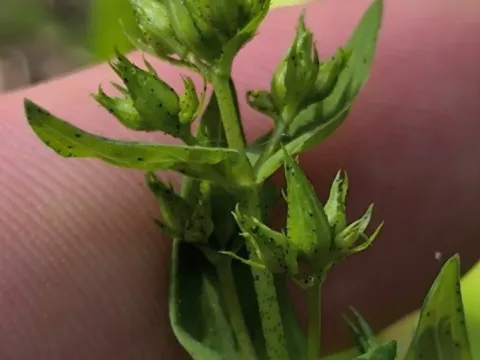
Hypericum elegans
Hypericum elegans
Sowing Hypericum elegans is typically carried out in late autumn or early spring. The seeds require stratification; therefore, autumn sowing allows them to undergo natural cooling, which significantly improves germination rates.
What the section contains
Hypericum elegans
For spring sowing, it is necessary to perform artificial stratification in a refrigerator for 30-45 days. Seeds should be sown at a depth of no more than 0.5–1 cm, as they are very small and require minimal soil coverage.
The seedbed must be carefully prepared: it should be fine-textured, free of weeds, and moderately moist. Row spacing should be at least 45-60 cm to allow for efficient mechanical weeding and inter-row cultivation.
Initial germination is slow, requiring constant monitoring of the soil's surface moisture. In the first year, the plant primarily develops a basal rosette and establishes a robust root system.
Optimal planting density depends on the production goals, but generally, 8-10 plants per linear meter is considered sufficient to ensure proper nutrient uptake and access to sunlight.
Hypericum elegans belongs to the Hypericaceae family and prefers well-lit areas. It is a heliophilic plant, and shading often leads to a decrease in the concentration of biologically active compounds.
The crop has moderate soil requirements but thrives best in light sandy loam or loamy soils with a neutral or slightly acidic pH. Waterlogged or heavy clay soils are detrimental to its development.
The plant is well-adapted to various climates, showing significant frost resistance and drought tolerance once established. The optimal temperature for active growth is between +18 and +25 degrees Celsius.
During the growing season, the plant responds positively to moderate irrigation, especially during the budding phase. However, excessive moisture can lead to fungal diseases of the root system.
Agronomic maintenance includes regular inter-row cultivation and weeding, as young Hypericum plants have low competitive ability against aggressive weeds during their early development.
The main threats to the crop include fungal diseases such as Fusarium wilt and gray mold, which develop under conditions of poor soil aeration and improper moisture management.
To prevent root rot, crop rotation must be strictly followed, avoiding cultivation on the same plot for at least 4-5 years and avoiding predecessors from the Solanaceae family.
Pests such as leaf beetles and aphids can damage the vegetative mass. In cases of severe infestation, treatment with biological insecticides is recommended.
Under high-humidity conditions, powdery mildew may occur, which requires management of planting density and ensuring adequate airflow within the crop stand.
Timely weeding remains an essential defense measure, as weeds act as reservoirs for pathogens and compete with the crop for vital soil nutrients.
The harvest is conducted during the mass flowering stage, when the concentration of beneficial flavonoids and tannins in the aerial parts reaches its maximum.
The raw material is collected by cutting the top 20-25 cm of the shoots. It is crucial to leave the lower part of the stem to ensure plant regeneration and successful overwintering.
Immediately after collection, the green mass must be processed for drying to prevent fermentation and the loss of biologically active compounds.
Drying is performed in well-ventilated rooms or industrial dryers at temperatures not exceeding +40...+45 degrees Celsius, while avoiding direct exposure to sunlight.
High-quality dried raw material must retain the natural color of leaves and inflorescences, possess a characteristic aroma, and be free from any foreign contaminants.