
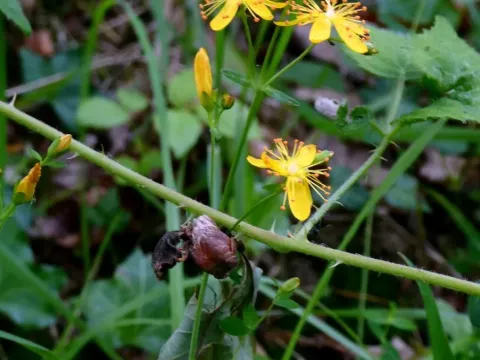
Beautiful St. John's wort
Hypericum pulchrum
Hypericum pulchrum, commonly known as Beautiful St. John's wort, is a perennial herb belonging to the family Hypericaceae. This species is native to Europe and is typically found in well-drained habitats such as heathlands, open woods, and grassy slopes.
What the section contains
Beautiful St. John's wort
Botanically, the plant features distinctive stems that are often reddish, with opposite, heart-shaped leaves that clasp the stem. The inflorescence consists of bright yellow flowers, frequently with reddish-tinged buds, which bloom throughout the summer months.
Cultivation requires soils with excellent drainage, as the plant does not tolerate waterlogging. It thrives in slightly acidic to neutral soils and performs best in locations that receive full sunlight to partial shade.
Climate requirements for this plant include moderate temperatures and resistance to cold, as it is well-adapted to temperate zones. It does not require intensive irrigation once established, making it a relatively drought-tolerant perennial.
Agrotechnical practices involve simple site preparation, including the removal of competing perennial weeds. Minimal fertilizing is usually sufficient, as the plant is adapted to nutrient-poor soils common in its natural heathland habitats.
The primary threats to Hypericum pulchrum are fungal pathogens, specifically those causing leaf spot and rust, which often manifest during periods of high humidity and stagnant air.
Pests such as aphids and leaf-eating beetles can cause aesthetic and vegetative damage. Management strategies include regular inspection and the use of targeted biological controls where necessary.
Preventative measures are essential, primarily focusing on maintaining adequate spacing between plants to ensure good airflow. Removing plant debris from the base of the stems helps reduce the overwintering of pathogens.
Although generally hardy, the plant may suffer from crown rot if the soil structure becomes too compact or if the planting site does not provide adequate runoff during heavy rainfall.
Integrated pest management (IPM) is recommended for larger cultivation areas to ensure the health of the plants while maintaining sustainable and ecological growing practices.