
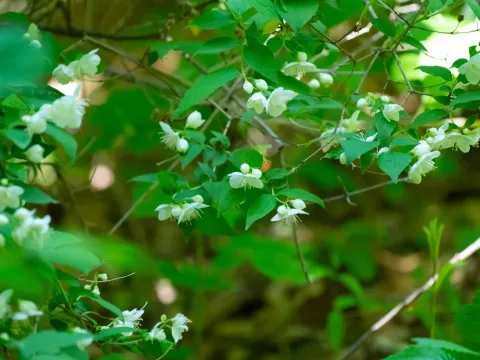
Mock orange
Philadelphus tenuifolius
Philadelphus tenuifolius, commonly known as a type of mock orange, is a deciduous shrub belonging to the Hydrangeaceae family. Its native habitat spans across the Russian Far East, Korea, and Northeast China, where it thrives in diverse temperate forest conditions and woodland edges.
What the section contains
Mock orange
The plant requires a location with full sun to partial shade to achieve optimal blooming. While it is highly hardy, providing a site protected from harsh, drying winds will help maintain the health of the foliage and ensure the integrity of the delicate flower buds throughout the spring season.
Soil preferences include fertile, well-drained loamy soils with a near-neutral pH balance. Proper drainage is critical for this species, as it is susceptible to root rot in waterlogged conditions; therefore, incorporating organic matter into heavy soils is recommended to improve structure and drainage.
General care involves consistent watering during dry spells, especially for younger plants, and routine pruning after the flowering period. Pruning is essential to remove spent wood, encourage new vigorous growth from the base, and maintain the aesthetic shape of the shrub throughout the season.
In landscaping, this species is highly prized for its fragrant white flowers and graceful arching branches. It is commonly utilized in mixed borders, as a solitary specimen in residential gardens, or planted in groups to create naturalistic screens and hedges in public urban park spaces.
Common insect pests affecting this shrub include aphids and spider mites, which can cause leaf curling and yellowing. Integrated pest management strategies, such as physical removal or the application of biological controls and horticultural soaps, are recommended to maintain plant vitality.
Fungal diseases, including leaf spot and gray mold, can occur if environmental conditions are overly humid or if the shrub lacks proper airflow. Maintaining adequate spacing between plants and ensuring good sunlight penetration are the best preventive measures against these common horticultural threats.