
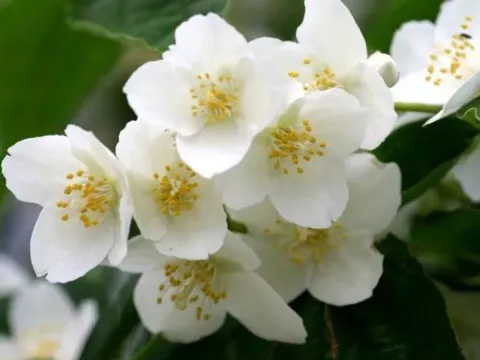
Mock orange hybrid
Philadelphus hybrids
Philadelphus hybrids, commonly known as mock orange, belong to the Hydrangeaceae family and are highly valued for their exquisite fragrance and showy, often double flowers. These hybrids are the result of selective breeding to enhance bloom quality and shrub architecture.
What the section contains
Mock orange hybrid
The optimal site for planting is a location with full sun or partial shade. While they are adaptable to various conditions, maximum sunlight is crucial for prolific blooming and strong stem development, preventing the bush from becoming leggy or sparse.
These shrubs thrive in well-draining, fertile, and slightly alkaline to neutral soil. Poorly drained sites should be avoided to prevent root rot, as the shrub is sensitive to prolonged waterlogging during the dormant season and early spring growth stages.
Standard cultural practices include consistent watering during dry spells and regular application of compost or balanced fertilizer in early spring. Mulching the base of the plant helps retain soil moisture and suppresses weeds, creating a stable environment for roots.
Pruning is essential for maintaining plant health and vigor. It should be performed immediately after the flowering period, focusing on removing one-third of the oldest stems. This encourages new, healthier growth that will carry flowers in the following season.
Common pests include aphids and spider mites, which can cause significant damage to foliage and young shoots. These insects thrive in dry conditions and can multiply rapidly if left unchecked, leading to stunted plant growth.
Management of these pests involves the use of horticultural oils or systemic insecticides when infestation levels are high. It is recommended to use these products sparingly to protect beneficial predatory insects that inhabit the garden.
Fungal diseases, such as leaf spot, may occur when air circulation within the shrub's canopy is restricted. Dense foliage trapping humidity creates the perfect conditions for pathogens to develop and spread across the leaves.
Cultural prevention remains the best defense against disease. Proper spacing during initial planting and annual thinning of the canopy ensures adequate ventilation, which significantly reduces the risk of fungal outbreaks throughout the season.
Always inspect the undersides of the leaves for early signs of pests or lesions. Rapid identification and the removal of severely affected branches can effectively control the spread of disease without the need for intensive chemical applications.