
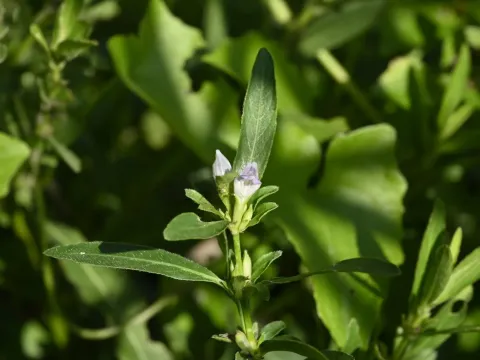
Hygrophila lancea
Hygrophila lancea
Hygrophila lancea is a versatile aquatic plant belonging to the Acanthaceae family. Originally native to Southeast Asia, it is commonly found in tropical marshes and shallow riverbanks. In an agricultural and aquascaping context, it is valued for its ability to adapt between submerged and emersed growth forms.
What the section contains
Hygrophila lancea
The plant requires high-intensity lighting to maintain its compact growth habit and vibrant leaf coloration. If the light levels are insufficient, the plant will tend to become leggy, with larger internode distances. Proper spectral balance, particularly in the red and blue ranges, is crucial for promoting healthy development.
Soil requirements involve a nutrient-rich substrate, preferably one designed for planted aquariums. Because Hygrophila lancea relies heavily on nutrient absorption through its roots, regular use of iron-rich root tabs is recommended. A substrate that maintains slightly acidic to neutral conditions helps in the efficient uptake of minerals.
Regarding water parameters, the plant thrives in temperatures between 22°C and 28°C. It is tolerant of various hardness levels but prefers soft to moderately hard water. The regular addition of CO2 injection is highly beneficial, as it significantly enhances growth rates and contributes to the robust physiological health of the plant stems.
Maintenance involves frequent trimming, which serves two purposes: shaping the plant for aesthetic appeal and propagation. By pruning the stems, gardeners can stimulate lateral growth, creating a bushier appearance. The clippings can be easily replanted in the substrate, where they will develop roots within a short period.