
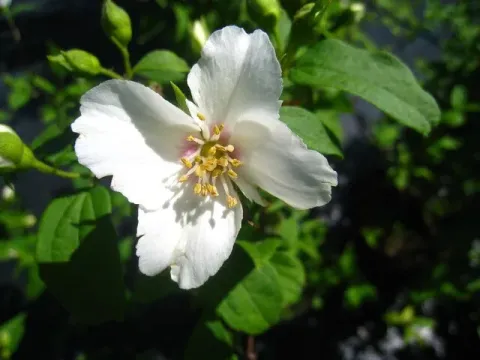
Lemoine Mock Orange
Philadelphus lemoinei
Lemoine Mock Orange (Philadelphus lemoinei) is a distinguished group of hybrid deciduous shrubs belonging to the Hydrangeaceae family. Developed in the late 19th century by French breeder Victor Lemoine, this variety represents a cross between Philadelphus coronarius and Philadelphus microphyllus, resulting in a compact and floriferous plant.
What the section contains
Lemoine Mock Orange
The botanical structure of this shrub is defined by slender, arching branches that are covered in abundant, highly fragrant white flowers during the early summer season. Due to its smaller stature, usually reaching 1–2 meters, it is a preferred choice for residential landscaping and formal garden designs.
To ensure optimal growth, Lemoine Mock Orange requires a location with full sunlight or partial shade. It thrives in well-draining, nutrient-rich, and slightly acidic to neutral soils, avoiding areas prone to heavy waterlogging, which can compromise the health of its root system.
Agrotechnical maintenance focuses on providing adequate moisture during the growing season and routine pruning. Pruning should be performed immediately after flowering to remove old wood and encourage the growth of new, vigorous stems that will provide flowers in the following cycle.
This shrub is known for its high level of cold hardiness and versatility in various landscape settings. Its ability to tolerate urban environmental stress makes it a reliable choice for suburban parks and metropolitan garden areas where air quality may be moderate.
Pests such as aphids and spider mites are the most common adversaries for the Lemoine Mock Orange. Gardeners should monitor the foliage during the spring and summer months, applying insecticidal soaps or systemic pesticides if an infestation is detected.
Fungal diseases like leaf spot or powdery mildew can occur, especially in stagnant air conditions or during periods of prolonged high humidity. Proper spacing between plants and ensuring excellent air circulation around the canopy are the best preventive measures to maintain plant health.