
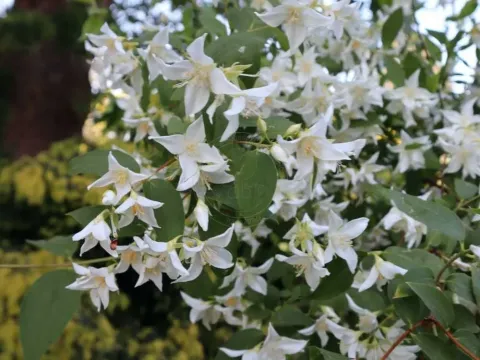
Philadelphus falconeri
Philadelphus falconeri
Philadelphus falconeri, commonly known as a type of mock orange, is an elegant deciduous shrub belonging to the Hydrangeaceae family. It is particularly valued in landscaping for its graceful, arching branches and white flowers that possess a distinct, refined fragrance.
What the section contains
Philadelphus falconeri
Originating from hybrid breeding within the genus, this species shares characteristics with wild ancestors found in temperate regions of North America and East Asia. It has become a staple plant in gardens throughout the temperate zone due to its reliable decorative performance.
The culture requires a sunny position for optimal flower production, though it can tolerate light shade. In areas with harsh winters, it is advisable to plant the shrub in a sheltered spot protected from cold northern winds, which can damage tender flower buds.
Soil requirements are relatively specific: the plant thrives in fertile, well-draining, and moisture-retentive loamy soils. It does not tolerate waterlogging, so ensuring excellent drainage is critical during the planting phase to prevent root health issues.
Agrotechnical maintenance focuses on a post-flowering pruning routine. By removing approximately one-third of the oldest stems each year, gardeners encourage the growth of vigorous new shoots, ensuring the shrub remains dense and prolific in its bloom cycle.
Aphids are the most common pests, often clustering on new growth and causing curling of leaves. Early detection and treatment with mild insecticides are effective in managing populations before they cause significant aesthetic damage to the plant.
Spider mites can become a nuisance during prolonged hot and dry spells. These pests thrive in low humidity, so consistent watering and overhead misting can serve as a deterrent, along with specialized treatments if an infestation is observed.
Powdery mildew is a common fungal threat that appears as a white, dusty layer on the foliage, typically under humid conditions. Providing adequate spacing between plants to improve airflow is the most effective cultural method to reduce the risk of this infection.
Leaf spot diseases can occur during wet summers, leading to premature leaf drop. Removing and destroying fallen infected leaves in autumn is a recommended practice to limit the overwintering of fungal spores that might threaten the plant the following year.
Scale insects may occasionally attach themselves to the woody stems. These are best managed by manual removal or the application of horticultural oils during the dormant season, which helps in suffocating the pests without harming the shrub.