
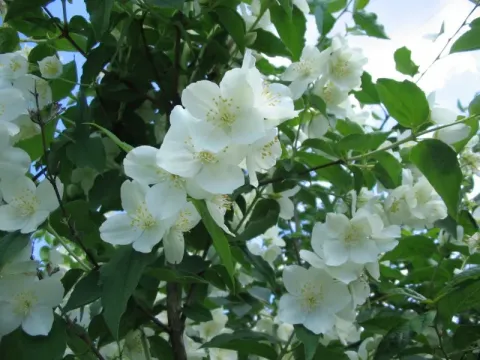
Mock orange
Philadelphus maximus
Mock orange (Philadelphus maximus) belongs to the Hydrangeaceae family. It is a robust deciduous shrub known for its spectacular, large white flowers and sweet, heavy fragrance that dominates the garden during the blooming season.
What the section contains
Mock orange
The plant thrives in full sun or light shade environments. For optimal performance, it requires at least six hours of direct sunlight per day, which ensures healthy flower bud development and maintains the plant's structural integrity.
It prefers well-drained, nutrient-rich soil with a neutral to slightly alkaline pH. Drainage is a crucial factor; the species cannot tolerate waterlogged conditions, which often lead to root rot and premature plant decline.
Climate adaptation is significant, as the shrub is hardy in many temperate zones. Regular watering is necessary during the establishment phase and periods of intense summer heat to maintain the turgidity of the leaves and prevent flower drop.
Maintenance pruning should be performed immediately after the flowering period ends. The goal is to remove spent flower stalks and thin out old, woody stems to stimulate fresh growth and maintain the desired aesthetic shape of the plant.
The most common pests include aphids and scale insects, which tend to congregate on young, tender shoots. These can be managed through biological control methods or systematic application of insecticidal soaps if infestation persists.
Fungal issues, such as powdery mildew, often appear during humid summers with poor air circulation. Proper spacing between individual plants and avoiding overhead irrigation are the primary cultural practices to minimize these risks.