
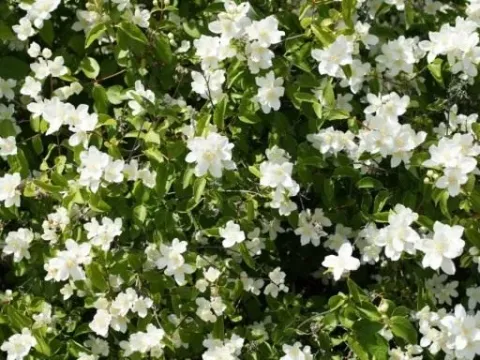
Mock orange
Philadelphus insignis
The Mock orange (Philadelphus insignis) is an impressive deciduous shrub belonging to the Hydrangeaceae family. It is widely recognized for its high ornamental value, characterized by vigorous upright growth and masses of fragrant, snow-white flowers that bloom in early summer.
What the section contains
Mock orange
Native to North America, this plant is well-adapted to temperate climates but requires specific environmental conditions to thrive. It performs best in well-drained, fertile soil with a neutral to slightly alkaline pH, ensuring that the roots are not subjected to constant waterlogging.
In terms of climate, the species requires a location with full exposure to sunlight. While it can withstand partial shade, significant shading often leads to reduced flower production and a sparse, leggy appearance of the branches, which reduces the plant's structural integrity.
Basic agronomic maintenance involves regular hydration during the initial years of establishment and during prolonged dry spells. Supplemental organic feeding with compost or balanced NPK fertilizers in early spring helps sustain robust vegetative growth and heavy flowering cycles.
Pruning is essential for maintaining the health and aesthetics of the shrub. Gardeners should implement a program of removing approximately one-third of the oldest branches every three years to encourage new, vigorous growth and prevent the center of the bush from becoming overly dense.
Common pests affecting Philadelphus insignis include aphids, spider mites, and scale insects. These organisms often exploit plants that are stressed by drought or poor nutrition, necessitating proactive scouting during the active growing season.
Fungal issues, particularly leaf spot and powdery mildew, can emerge in environments with high humidity and poor air circulation. Effective control measures focus on spacing the shrubs appropriately and removing infected foliage to prevent the spread of spores.