
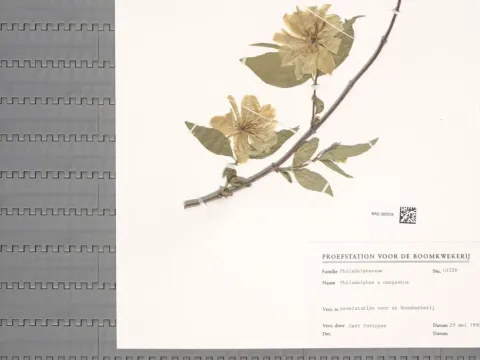
Mock orange
Philadelphus congestus
Philadelphus congestus, commonly referred to as a type of mock orange, belongs to the Hydrangeaceae family. Native to the North American regions, this species has evolved in mountainous environments, making it a robust and adaptable woody plant for various garden settings.
What the section contains
Mock orange
Botanically, it is a deciduous shrub characterized by its dense growth habit. The branches are typically upright, covered in simple leaves that provide a lush appearance. Its flowers are typical of the genus, producing a mild, pleasant fragrance during the peak of the blooming season.
The plant thrives best in positions that receive full sun to partial shade. Adequate light exposure is essential for the plant to produce a significant number of blossoms, which is one of the primary reasons for its cultivation in residential landscapes.
Regarding soil requirements, Philadelphus congestus prefers well-draining, fertile soil. While it is tolerant of a range of soil types, it performs optimally in soils that are slightly acidic to neutral. Constant waterlogging should be avoided to prevent root decay.
In terms of agricultural and horticultural use, this shrub is prized for its ornamental value. It serves as an excellent component for hedge plantings, as well as a standalone feature in shrub borders, contributing to both visual interest and ecological value in the garden.
Major diseases affecting this species often involve fungal infections that stem from high humidity levels. Powdery mildew is the most common issue, manifesting as a dusty white fungal growth on the leaves, which can lead to leaf curling if left untreated.
Pests that frequently target the mock orange include aphids, which cluster on the tender tips of new growth. These insects suck the sap from the plant, potentially spreading viral pathogens and stunting the plant's overall development during the spring season.
Spider mites are another notable threat, particularly during hot and dry spells. These microscopic pests feed on leaf cells, causing a stippled or mottled appearance and eventually leading to yellowing and premature leaf drop if not managed correctly.
Effective management begins with proper plant spacing to ensure adequate air circulation. Pruning should be performed annually to remove dead or diseased branches, which limits the environment where fungi thrive and allows for better penetration of sunlight.
If chemical intervention is necessary, the use of horticultural oils or insecticidal soaps can be effective against aphids and mites. Always ensure that the selected treatment is appropriate for the severity of the infestation and follow safety protocols for local fauna.