
Skunk currant
Ribes glandulosum Grauer
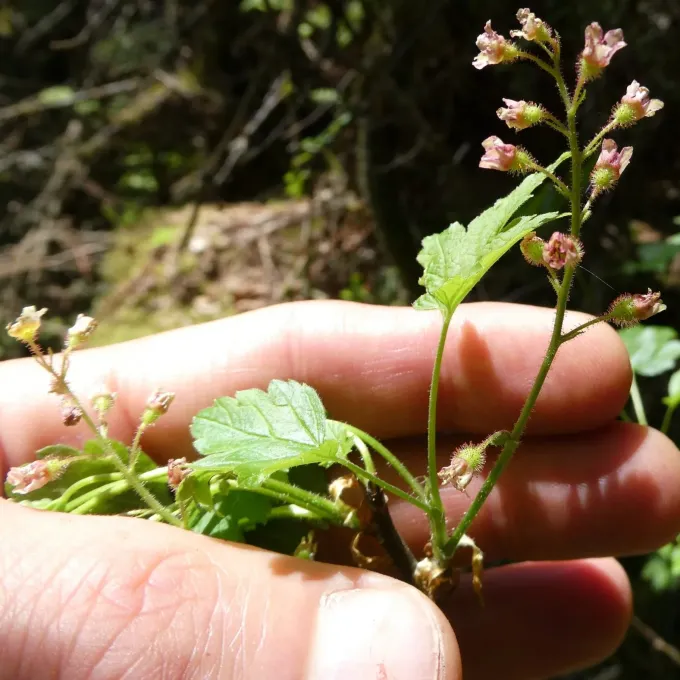
Description
Growing requirements
The skunk currant (Ribes glandulosum Grauer) is a low-growing, deciduous shrub belonging to the Grossulariaceae family. Native to the northern regions of North America, it is commonly found in cool, moist habitats such as rocky slopes, swamps, and woodlands.
This species thrives in cool climates and requires consistently moist, humus-rich soil to establish properly. It is well-adapted to acidic soil conditions and exhibits a significant level of cold hardiness, surviving harsh winter conditions common in its native range.
Cultivation practices focus on providing partial shade, as direct, intense sunlight can stress the plant and reduce its leaf quality. Adequate moisture management is critical; the shallow root system is highly sensitive to drought and heat, necessitating careful site selection.
Mulching is essential for successful growth, as it helps regulate soil temperature and moisture retention around the shallow root zone. Using organic materials like wood chips or leaf mold is recommended to mimic the natural forest floor environment.
While primarily wild, the plant has potential in horticultural breeding programs due to its resilience. Its berries, characterized by a distinct aroma, are sometimes collected for use in jams and preserves, although they are not widely cultivated for commercial fresh market production.
Main diseases and pests
The primary health threats to the skunk currant include fungal diseases, notably powdery mildew and leaf spot pathogens, which proliferate in poorly ventilated or excessively humid conditions. Regular pruning is essential to improve airflow.
Insect pests such as aphids and spider mites can infest the foliage, particularly during warmer, drier spells. Constant monitoring is recommended to ensure that pest populations do not reach a level that impacts the overall vigor of the shrub.
Stem gall midges present a specific threat by causing abnormal growth on branches, which necessitates the immediate removal and destruction of affected wood to prevent the spread of the infestation to healthy parts of the plant.
Integrated pest management, focusing on cultural practices such as sanitization and nutrient management, is the best approach. Avoid over-fertilization, as it may create succulent growth that is more attractive to pests and susceptible to winter injury.
Preventative applications of fungicides during the early spring, before bud break, can serve as an effective safeguard against fungal diseases, ensuring a healthier and more productive growing season for the shrub.