
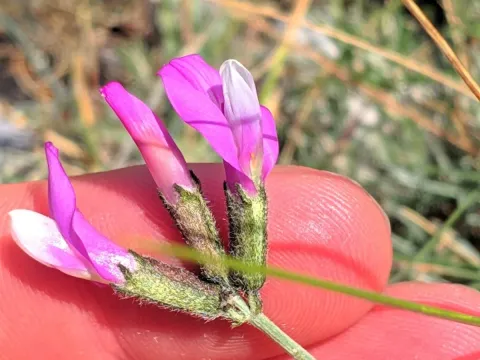
Silky-leaved milkvetch
Astragalus sericophyllus
The silky-leaved milkvetch (Astragalus sericophyllus) is a hardy perennial legume belonging to the Fabaceae family. Successful establishment of this crop begins with high-quality seed, which often requires scarification to overcome physical dormancy caused by a hard seed coat.
What the section contains
Silky-leaved milkvetch
The optimal planting period is early spring, which ensures that seedlings benefit from residual soil moisture. In colder climates, late autumn planting is also viable, as natural stratification during the winter improves the uniformity of spring emergence.
Seeds should be sown at a depth of 2 to 4 centimeters. The exact depth depends on the soil texture, with shallower placement preferred in heavier soils and slightly deeper placement in sandy soils to ensure consistent moisture access.
Row seeding is the most common agronomic practice, requiring a balance between density and individual plant space. Since the plant develops its root system extensively in the first year, minimizing weed competition during this period is essential for long-term stand success.
Proper inoculation with specific rhizobia bacteria is often recommended to maximize the plant's nitrogen-fixing potential. This biological synergy significantly reduces the need for synthetic nitrogen fertilizers in subsequent years of production.
This species is highly regarded for its drought tolerance and ability to thrive on marginal or saline soils. It prefers well-drained calcareous soils and performs best in environments with a neutral to slightly alkaline pH range.
The plant features a deep taproot that allows it to access water deep within the soil profile, making it a reliable forage source in semi-arid and continental climates. It shows excellent cold hardiness, surviving harsh winter conditions.
Full sun is a critical requirement for this crop, as it does not tolerate shading from competing vegetation. Adequate ventilation is also necessary to prevent humidity-related issues within the foliage, which can trigger fungal diseases.
While tolerant to poor nutrient conditions, the addition of phosphorus can enhance both root development and overall biomass yield. The plant is sensitive to waterlogging, so choosing sites with good natural drainage is a key management decision.
Astragalus sericophyllus is well-adapted to regions with significant seasonal temperature variations. Its resilience in extreme environments makes it an excellent candidate for the restoration of degraded landscapes and stabilization of erosion-prone slopes.
The primary agricultural use of this culture is as a source of high-protein forage for ruminant livestock. It can be harvested for hay or used for managed grazing, providing stable nutrient content throughout the growing season.
Yields vary based on regional precipitation and site fertility. In productive stands, the crop can support multiple harvests if managed with proper timing, ensuring plants have enough recovery time before the next cutting.
Seed production is a vital economic component for growers. Harvesting is typically conducted when the pods transition to a mature color, requiring careful handling to prevent seed shattering during the drying and processing phases.
Beyond forage, the plant provides significant ecological benefits. Its ability to improve soil structure through deep root penetration and nitrogen fixation makes it a valuable rotation crop for enhancing soil health for future grain cycles.
Due to its longevity and hardy nature, it is often utilized in permanent pasture seed mixes in regions where moisture availability is limited, providing a reliable feed source when other grasses fail.
Leaf spot diseases are the most common pathological threats, particularly in years with high humidity or poor field drainage. Preventing overly dense stands is a practical cultural method to manage these infections effectively.
Pests such as seed-feeding weevils can significantly reduce seed yields. Integrated pest management practices, including scouting during the flowering stage, are necessary to determine if intervention is needed to protect reproductive structures.
Root rot, while less common in well-drained soils, can become an issue if excessive moisture persists. Maintaining soil health and avoiding soil compaction are the best preventative measures against this threat.
Powdery mildew may occur on the foliage in late summer, especially if the air circulation within the stand is poor. Selecting resistant cultivars and maintaining optimal plant spacing are key components of a successful disease management strategy.
Field monitoring should be a standard procedure to detect early signs of pest pressure or disease development. Early detection allows for the implementation of sustainable management techniques, ensuring the crop remains productive over many years.