
Silky Genista
Genista sericea
Description
Growing requirements
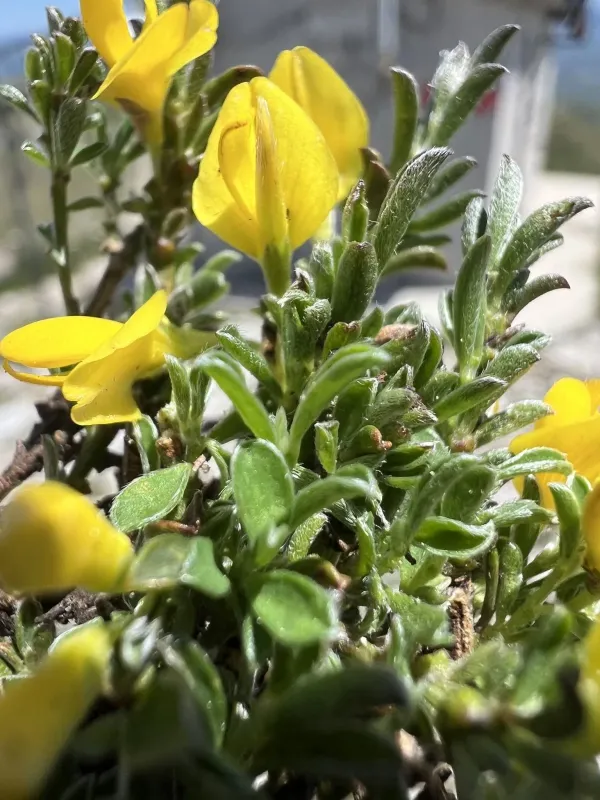
Silky Genista (Genista sericea) is a perennial subshrub belonging to the Fabaceae family. It is recognized for its compact structure and exceptional ability to thrive in challenging, nutrient-poor environments.
This species is highly adapted to xeriscaping, requiring full sun exposure to maintain its characteristic compact shape and abundant blooming patterns. It is strictly sensitive to waterlogged conditions, requiring well-drained, sandy, or rocky soil.
Agronomic management involves selecting sites with excellent air circulation. The plant prefers neutral to slightly alkaline pH levels and performs poorly in heavy, water-retentive clay soils.
As a legume, it contributes to soil health through biological nitrogen fixation. This attribute makes it a valuable asset for soil stabilization and landscape restoration in arid regions.
Maintenance is minimal, focusing primarily on post-flowering pruning to encourage new growth and prevent the shrub from becoming excessively woody over time.
Main diseases and pests
The plant is susceptible to fungal diseases such as leaf spots, which often occur when moisture levels around the foliage remain high for extended periods during the growing season.
Aphids constitute the primary insect threat, particularly affecting young tender shoots during the spring growth flush, which can lead to stunted plant development.
Root rot is a significant risk in poorly drained soil, which can be exacerbated by excessive rainfall or improper irrigation schedules.
Management of these threats includes the strategic application of fungicides and horticultural oils, alongside strict adherence to proper watering cycles to ensure root health.
Gardeners should also monitor for spider mites during prolonged droughts, as these pests thrive in hot, dry conditions and can quickly weaken the plant’s vigor.