
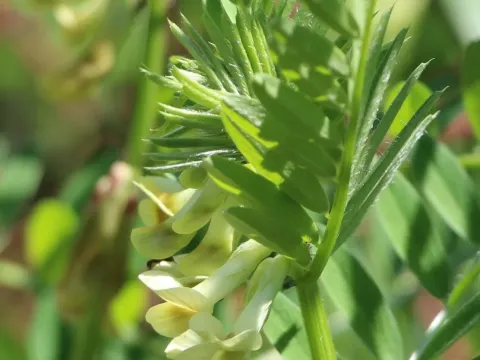
Vicia ciliatula
Vicia ciliatula
Vicia ciliatula is a member of the Fabaceae family. This perennial herbaceous plant is primarily found in mountainous regions but offers significant potential as a component in sown meadows and pastures due to its resilience.
What the section contains
Vicia ciliatula
The optimal sowing time is early spring, once soil temperatures reach 5-8 degrees Celsius. Ensuring good soil-to-seed contact is essential for uniform germination and subsequent establishment of the stand.
When autumn sowing is practiced, it is vital to account for local winter conditions to ensure the plants establish a rosette before frost. Sowing depth should range from 2 to 4 centimeters depending on the soil structure.
Seeding rates are typically adjusted based on whether the crop is grown in a pure stand or as part of a mix. Including grasses in the mixture provides structural support, preventing the legume from lodging.
Preparation of the seedbed involves leveling and firming the soil. This creates the necessary density for small-seeded legumes, preventing them from being planted too deep and ensuring a rapid start for the root system.
This species is well-adapted to moderate climates, exhibiting cold hardiness and the ability to thrive in regions with variable temperatures. It is particularly suited for high-altitude environments where other legumes might struggle.
Vicia ciliatula prefers well-drained, neutral, or slightly acidic soils. It does not tolerate waterlogging; therefore, heavy, clay-rich soils with poor drainage should be avoided or improved through land management.
The plant benefits from nitrogen-fixing bacteria, which enrich the soil fertility. While supplemental nitrogen is generally not required, the crop responds positively to phosphorus and potassium fertilization during the establishment phase.
Adequate sunlight is necessary for optimal biomass production. Although it can tolerate partial shade, maximum yield and vigor are observed when the plants are grown in full sun exposure throughout the day.
On nutrient-poor sites, seed inoculation with specific rhizobia strains is recommended. This practice significantly enhances initial growth rates and ensures the plant begins contributing nitrogen to the soil profile quickly.
The yield of green biomass depends on the growth stage and the frequency of harvesting. Peak nutritional density, including protein content, is reached during the budding and early flowering stages.
With appropriate management, this crop allows for two to three cuts per season. When integrated into forage mixtures, it greatly enhances the overall nutritional profile of hay or silage produced for livestock.
The crop's productivity is intrinsically linked to its ability to cycle nitrogen within the ecosystem. Its deep root system also allows for effective utilization of moisture during dry spells, maintaining production when others may slow.
Nutritionally, Vicia ciliatula is valued for its protein content and balanced amino acid profile. This makes it a high-quality forage choice for ruminant livestock, potentially boosting milk and meat production efficiency.
Frequent, managed harvesting promotes vegetative regrowth. However, producers should avoid extremely low cutting heights to protect the crown of the plant, which is essential for survival and long-term stand longevity.
Common diseases include Ascochyta blight and powdery mildew, particularly in humid conditions. Prevention focuses on maintaining appropriate stand density and ensuring good air circulation within the field.
Pests such as pea leaf weevils can damage young seedlings. Integrated pest management, including regular crop scouting and the use of resistant varieties, is key to minimizing damage to the foliage and growth points.
Aphids can cause stress by feeding on plant sap and potentially transmitting viruses. Monitoring the crop for aphid colonization is crucial, especially during warm, dry weather when pest populations can rapidly increase.
Anthracnose can also occur, appearing as lesions on stems and leaves. Using high-quality, certified seed and implementing strict crop rotation intervals helps to reduce the primary inoculum load in the field.
Crop rotation is fundamental to managing soil-borne diseases. A minimum three-year interval between legume crops is recommended to break the life cycle of specialized pathogens and keep the soil healthy.
The ideal window for harvesting green fodder is during the full bloom stage. At this point, the plant achieves the optimal balance between total mass and the quality of essential nutrients.
When harvesting for hay, favorable weather is required for rapid drying. Mechanical tedding is recommended to ensure even moisture loss and to preserve as many leaves as possible, which are the most nutritious parts.
For silage production, the crop should be wilted to a moisture content of 50-60 percent. This method minimizes nutrient losses in unpredictable weather and provides high-quality feed for the winter months.
Seed harvesting should occur when the majority of the pods have matured and darkened. Careful threshing is necessary to avoid mechanical damage to the small seeds, which can compromise their future viability.
Post-harvest cleaning and drying to 12-14 percent moisture are essential. Proper storage in cool, dry conditions maintains high germination rates, ensuring the seeds are ready for future planting seasons.