
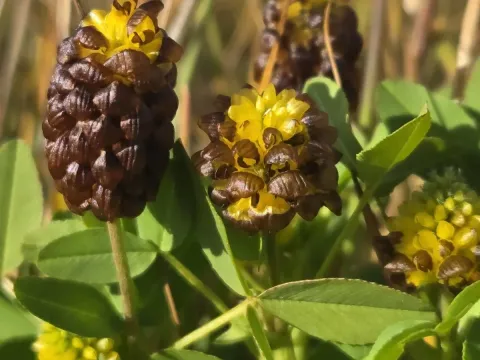
Chestnut clover
Trifolium spadiceum
Chestnut clover is a perennial herbaceous plant belonging to the Fabaceae family. Sowing is typically performed in early spring as soon as soil temperatures reach 8–10 degrees Celsius, ensuring favorable conditions for germination.
What the section contains
Chestnut clover
For overseeding natural meadows, early spring is the optimal window while soil moisture remains high. This provides the seedlings with the necessary resources to establish themselves before the onset of drier summer months.
Seed depth must be shallow, ideally between 1 to 2 centimeters, as the small seeds are sensitive to deep burial. Rolling the soil after sowing is a critical step to ensure adequate seed-to-soil contact and improved moisture absorption.
Seeding rates vary depending on whether the clover is used as a monoculture or within a seed mixture. For managed hay meadows, a standard rate of 10 to 14 kilograms per hectare is recommended for optimal density.
Seed scarification is highly advised before planting to overcome seed coat dormancy. This simple pre-sowing treatment increases field emergence significantly and leads to more uniform stands.
This species is considered a hygrophyte, thriving in moist and damp soil conditions. It is frequently found in natural landscapes near water bodies and in low-lying meadows where moisture is consistent throughout the season.
Chestnut clover prefers slightly acidic to neutral soil pH levels. While it is adaptable, growth rates decline significantly in highly acidic environments, making liming a common management practice on such soils.
The plant demonstrates excellent winter hardiness, allowing it to survive low temperatures typical of temperate regions. It is well-adapted to the climatic cycles of Northern and Central Europe and parts of Asia.
Symbiosis with nitrogen-fixing bacteria in the root system is essential for its development. These bacteria facilitate the conversion of atmospheric nitrogen into a plant-available form, which reduces the need for synthetic nitrogen fertilizers.
Adequate sunlight is required for robust growth, though the plant can tolerate partial shade. However, optimal biomass production is achieved in open areas with full exposure to sunlight during the vegetative phase.
The yield of green biomass depends heavily on water availability and soil fertility levels. In favorable years with consistent rainfall, Chestnut clover can produce two high-quality cuttings for forage production.
It is valued as a forage crop due to its rich content of proteins and minerals. While individual yields might be lower than those of Red clover, its ability to thrive in damp soils makes it a vital component in mixed forage stands.
Phosphorus and potassium fertilization can substantially boost dry matter production. These nutrients support root development and increase the plant's ability to recover after harvesting or grazing events.
The species exhibits good regrowth capability. Following a cutting, new vegetative shoots emerge rapidly, ensuring a continuous supply of green fodder throughout the late summer and early autumn months.
Proper grazing management is essential to prevent excessive treading, which can damage the growing points. On wetter sites, rotational grazing is recommended to maintain the long-term productivity of the stand.
Chestnut clover is susceptible to several fungal diseases, including rust and anthracnose. These conditions become particularly problematic during periods of high humidity and fog, which facilitate the spread of spores.
Insects like the clover weevil and various aphid species pose a threat by attacking both foliage and reproductive structures. Monitoring pest populations is key to preventing significant damage to seed yields.
Root rot is a common challenge in poorly drained areas where water stagnation limits root aeration. This disease manifests as yellowing of the leaves and premature wilting of the plant base.
Preventive measures include maintaining appropriate crop rotation and ensuring fields are not left too dense, which promotes airflow. Chemical treatments are rarely used, with preference given to integrated pest management.
Early harvesting is an effective cultural control for many pathogens, as it removes the infested biomass before the diseases can reach the reproductive phase or spread to neighboring plants.
Harvesting for hay should occur during the full flowering stage to maximize nutrient density. At this point, the plants contain the highest concentration of digestible proteins and beneficial minerals.
Mechanical tedding is recommended during the drying process to ensure even moisture loss. Proper drying techniques are vital for preserving the forage's green color and essential vitamin content for livestock feed.
Seed harvesting should begin once the inflorescences have turned a characteristic chestnut color, indicating maturity. Harvesting must be performed during dry weather to prevent seed shattering and fungal contamination.
Post-harvest processing involves cleaning the seeds of debris and reducing moisture content through forced-air drying. Proper storage in cool, dry conditions is necessary to maintain long-term seed viability.
Strategic scheduling of cuttings helps extend the lifespan of the clover stand. By allowing sufficient recovery time between harvests, growers can maintain high-yielding meadows for several consecutive years.