
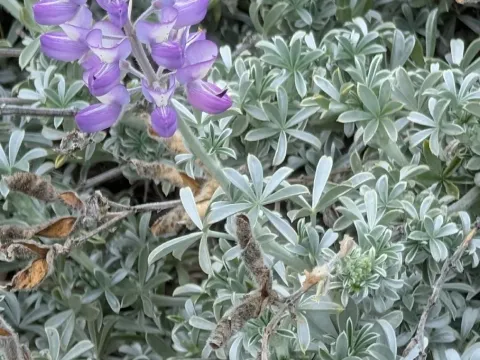
Chamisso bush lupine
Lupinus chamissonis
Lupinus chamissonis, commonly known as Chamisso bush lupine, is a perennial legume native to the coastal sand dunes of California. It plays a vital role in coastal stabilization.
What the section contains
Chamisso bush lupine
The plant is botanically distinguished by its woody base, silver-grey foliage covered with fine hairs, and striking violet-blue flowers arranged in terminal racemes.
To thrive, it requires full sun exposure and extremely well-draining, sandy or gravelly soil. It is poorly adapted to heavy clay soils or environments with stagnant water.
This species is highly drought-tolerant once established. Its deep taproot system allows it to reach moisture in sandy terrains, making it an excellent candidate for xeriscaping.
While not a traditional agricultural crop, its ability to fix atmospheric nitrogen improves soil fertility, making it valuable for land restoration projects.
Root rot, caused by various species of Phytophthora and Pythium, is the primary threat to the crop, typically triggered by improper irrigation management.
Aphids are common pests that colonize the succulent parts of the plant, often leading to the spread of viral mosaic diseases among younger stands.
Seed-boring weevils can significantly impact the reproductive cycle by feeding on developing seeds within the pods, reducing natural propagation.
Powdery mildew may occur in areas with high humidity or poor air circulation, manifesting as a white coating on the leaves and stems.
Effective management includes maintaining proper plant spacing, removing debris to reduce inoculum levels, and monitoring for early pest infestations.