
Chinese honeylocust
Gleditsia sinensis
Propagating Chinese honeylocust is primarily achieved through seeds, which feature a hard, impermeable seed coat. Scarification or cold stratification is essential to break dormancy and ensure uniform germination.
What the section contains
Chinese honeylocust
The optimal sowing time is in the early spring once the soil temperature has consistently increased. Seeds should be planted at a depth of about 3 to 5 centimeters in well-prepared, loose soil.
Vegetative propagation via stem cuttings is possible but requires professional handling, including the use of rooting hormones and a controlled humidity environment to prevent dehydration.
Young seedlings require intensive care, including weed control and consistent irrigation, during their first one to two years of development. Early competition from invasive grasses can severely stunt seedling growth.
For large-scale planting, spacing should be carefully calculated based on the intended use, whether for timber, erosion control, or ornamental purposes. Proper spacing ensures adequate airflow and reduces disease risks.
Gleditsia sinensis is a member of the Fabaceae family, native to the broadleaved forests of China. It is a highly adaptable species, known for its significant tolerance to heat and occasional drought conditions.
The tree thrives in a variety of soil types, ranging from sandy loams to heavier clays, provided they offer reasonable drainage. It performs best in neutral to slightly alkaline soil conditions.
As a sun-loving plant, it requires full exposure to maximize its growth rate and maintain its dense, lush crown. It is well-suited for urban environments, demonstrating resistance to air pollution and compaction.
While the tree is quite hardy, young specimens may be vulnerable to extreme cold, requiring protective measures in the northern edges of its potential growing range. Mature trees exhibit excellent winter hardiness.
Standard horticultural practices include maintaining clean mulch rings around the base of the tree and performing annual light pruning to improve structure. Its nitrogen-fixing capabilities make it a beneficial component of sustainable soil management.
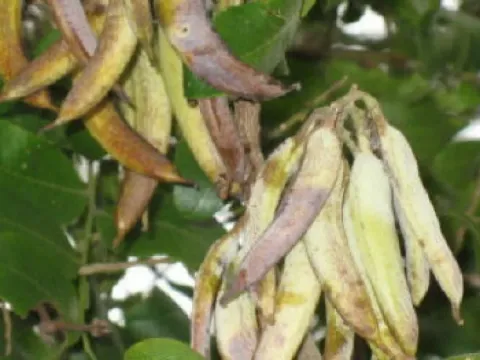
The fruits, which appear as long, flat pods, are the most economically valuable part of the Chinese honeylocust. They are harvested upon reaching full maturity, indicated by a dark, deep brown color.
The pods are a significant source of triterpenoid saponins, which are widely utilized in traditional medicine for their anti-inflammatory, antimicrobial, and detergent properties.
The timber of Gleditsia sinensis is highly prized for its durability, hardness, and resistance to decay. It is frequently employed in high-quality furniture making, construction, and specialized woodwork.
In landscaping, the tree is favored for its intricate, airy foliage and decorative thorns, which provide a unique structural element in park design and dense security hedges.
Beyond its aesthetic and medical uses, the species plays a vital role in agroforestry by preventing soil erosion on sloping terrains and serving as a robust windbreak for agricultural fields.
Chinese honeylocust is generally robust but can be prone to powdery mildew in high-humidity environments. Improving canopy ventilation through pruning is the most effective cultural method to prevent this issue.
Defoliating insects and caterpillars are the primary biological threats that can reduce the tree's vigor. Regular monitoring during the peak growing season is necessary for early detection and mitigation.
Spider mites can become a nuisance during hot and dry spells, particularly in urban heat island zones. Applying water sprays to the foliage can often keep populations at a manageable level.
Cankers and fungal infections of the bark may occur if the trunk is damaged by equipment or pests. Protecting the trunk from mechanical impact is crucial to maintaining the long-term health of the tree.
- Ensure adequate spacing between plants.
- Avoid over-watering or stagnant soil moisture.
- Use organic pesticides for insect control when needed.
- Sanitize pruning tools to prevent cross-contamination.