
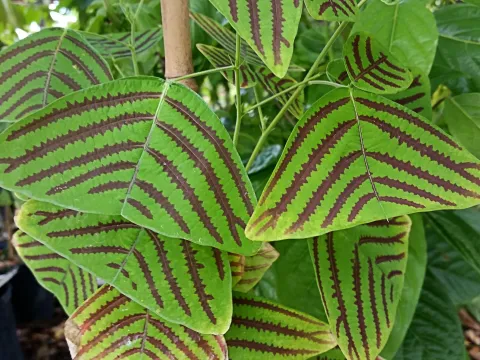
Christia
Christia
Christia, belonging to the Fabaceae family, is a predominantly heat-loving perennial plant, meaning sowing times are strictly linked to the establishment of stable high temperatures.
What the section contains

Christia
In regions with temperate climates, seeds are sown in protected ground or greenhouses in late February or early March to produce seedlings.
For successful germination, seeds require high substrate moisture and soil temperatures of at least 22–25 degrees Celsius to ensure uniform emergence.
Transplanting young plants to their permanent location should only occur after the threat of late frosts has passed and nighttime temperatures exceed 15 degrees.
In tropical cultivation areas, sowing can take place at the beginning of the rainy season, allowing the plant to maximize its active vegetation period.
Plants of the genus Christia, with Christia vespertilionis (butterfly wing plant) being the most well-known, originate from regions of Southeast Asia.
The crop has high light requirements, preferring bright, diffused light while being intolerant of direct midday sun exposure.
The soil medium must have a light structure, high aeration, and a slightly acidic or neutral pH to ensure efficient drainage of excess moisture.
Regular watering is a critical factor, although waterlogging and standing water in the root zone have a severely negative impact on root system development.
The plant responds well to regular applications of complex mineral fertilizers during active growth, especially during the formation of decorative leaves.
The main phytosanitary risks for this crop are linked to improper moisture management, which triggers the development of root and basal rots.
With insufficient ventilation in greenhouse or indoor environments, the plant may be susceptible to spider mite and mealybug infestations.
Powdery mildew is a frequent fungal disease that occurs when high air humidity combines with significant nighttime temperature drops.
To combat pests, it is recommended to use specialized insecto-acaricides and to perform regular preventative foliage treatments.
Timely removal of affected plant parts and maintaining optimal air circulation are the best methods for preventative crop protection.