
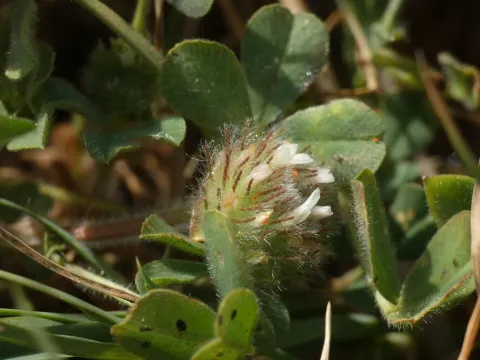
Cherler's clover
Trifolium cherleri
Cherler's clover (Trifolium cherleri) is an annual leguminous plant native to the Mediterranean basin, West Asia, and parts of North Africa. It is adapted to various Mediterranean environments, typically growing in open grasslands, rocky areas, and well-drained slopes.
What the section contains
Cherler's clover
The plant is distinguished by its dense covering of fine hairs, which serves as a physiological adaptation to reduce water loss. The stems are usually procumbent or ascending, and the inflorescences form compact, globose heads that become firm and rigid as the seeds mature.
From a soil perspective, this species thrives in a wide range of substrates, including sandy, loamy, and calcareous soils. It possesses a moderate tolerance for low fertility, as it can fix atmospheric nitrogen through a symbiotic relationship with specific soil bacteria, enriching the local ecosystem.
Cultivation requires abundant sunlight, as the plant is sensitive to shade and competition from taller grasses. It favors temperate regions with mild winters, as it completes its life cycle within the cooler, wetter months, avoiding the peak heat of the summer drought.
Cherler's clover is primarily utilized as a component of natural forage for livestock, particularly sheep and goats. While it provides good nutritional value during the vegetative stage, the rigid hairs on mature plants may reduce its palatability compared to other clover species.
Like many Trifolium species, Cherler's clover can be affected by fungal pathogens such as rust and powdery mildew. These diseases are most prevalent in areas with high humidity and poor ventilation, which can lead to significant foliar damage.
Root rot represents another major threat, particularly in poorly drained soils. The accumulation of moisture around the root zone encourages pathogens that impede nutrient uptake and may lead to plant collapse during critical growth stages.
In terms of insect pests, clover seed weevils and various species of leaf-eating beetles can cause considerable damage. The infestation of seed heads by specialized larvae is a particular concern if the crop is being grown for seed production purposes.
Integrated pest management strategies are crucial for maintaining healthy stands. This includes crop rotation and the maintenance of optimal grazing intensity, which prevents the build-up of specific insect populations that target this plant.
Monitoring for signs of nutrient deficiency or pathogenic stress is recommended during the mid-season. Timely intervention, focusing on biological controls or cultural practices, is preferred to maintain the integrity of the legume population within the field.